The Ugly Underbelly of the Health Humanities

IMG_4207
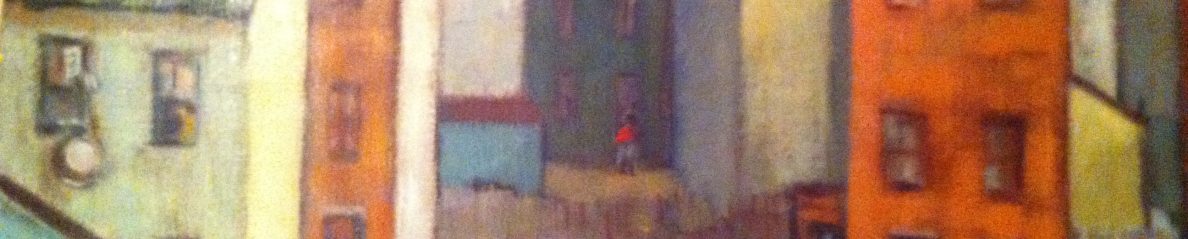
“Release Your Plans” oil on canvas by Denver-based artist Daniel Spricks.

Ugly, as in ‘unpleasantly suggestive, causing disquiet, likely to involve violence of some sort, repulsive.’ Underbelly, as in ‘beneath the surface, hidden, vulnerable, corrupt, sordid.’ Health humanities, as in the relatively new transdisciplinary field linking the arts and humanities with health and healthcare. Health humanities is both the term and the international movement intended to widen the more traditional field of medical humanities with its focus on physician practice and physician education. (See The International Health Humanities Network for more information.)

I have just returned to my life in Seattle after four days in Denver spent pondering the ugly underbelly of the health humanities. I was a participant-observer at the 4th Annual International Health Humanities conference, Health Humanities: The Next Decade, held at the University of Colorado School of Medicine Center for Bioethics and Humanities. The stated purpose of the conference was to “…bring together scholars, educators, clinicians, health advocates, students, patients and caregivers in an effort to identify the core issues and guiding values as well as define the expanding scope of the health humanities.”

Out of 100 or so conference participants, I believe I was one of only three nurses. Professor David Flood from the College of Nursing and Health Professions at Drexel University served as a conference committee member, but there were no nurses (unless they were deeply closeted nurses) who presented at the conference. The third nurse was Jamie Shirley, PhD, a terrific nurse ethicist and lecturer at the University of Washington Bothell campus. At the risk of adding to the tiresome ‘whiny nurse syndrome/trope in academese,’ I can’t help asking, “Where were the nurses?” As this was hands-down the best, most thought-provoking conference I’ve ever been to–and was, correctly I think, proclaimed as a historic conference with far-reaching consequences–why weren’t there more nurses at ‘this table?’

What I most loved about the conference was that the planners, speakers, and participants all openly acknowledged and explored the ugly underbelly of the health humanities. Not just who/what groups of people are included and excluded within the theory and practice (and international conference) of the health humanities, but other and perhaps more uncomfortable questions, such as:

By attempting to train medical, nursing, and other healthcare professions students in ‘narrative competence,’ are we turning this into yet another skill to include on a checklist? (The ‘tyranny of competencies’ as it has been called.) And, as Katie Watson, JD of Northwestern University Feinberg School of Medicine pointed out in a session on narrative advocacy, is a focus on narrative competence ignoring the fact that perhaps this is intrusive, itself a form of violation–of violence? Do we as teachers of the health humanities understand what it costs our students (as well as ourselves) to be opened up/made more vulnerable to the emotional pain of patients, of families, of communities, and of the world? Do we do enough to help our students ‘learn how to carry’ (or perhaps how to carry and then let go of) traumatic patient/community stories? Where does the ‘enterprise of narrative medicine’ fit within the health humanities? What are the professional consequences of doing radical art, radical writing, radical practice, and I’d add, radical teaching? By attempting to widen medical humanities to health humanities, are we adding to the cult of healthism?

And an ‘ugly underbelly’ question that I asked in a session yesterday (when I stepped outside of my observer role): why is religion/spirituality seemingly a taboo topic within the health humanities? Throughout the conference people tip-toed around religion and spirituality. Don’t people see that the privileging of secular humanism, the marginalizing–or worse, belittling–the role of religion and spirituality within our world, within healthcare practices, within health policy, within our own lives, is a grave danger? I’m not referring to a grave danger to our ‘souls,’ whatever that may mean, but rather to our lives together in communities, to the common good, to the civil discourse necessary for democracy.

On Strike

IMG_4119
Red Square and Suzzallo Library, University of Washington. Photo credit: Josephine Ensign/2015.

What would happen if you didn’t show up to work, if you walked out of work, if you went on strike? Would anyone notice? Would anyone suffer? Besides earning a (hopefully ‘living wage’) paycheck and (hopefully) decent benefits including heath insurance, how essential is the work we do? And just how expendable are we?

These questions have been on my mind over the past several weeks as a labor dispute rumbles along at the University of Washington in Seattle where I teach. Our faculty members are not unionized, but our teaching assistants are part of the labor union UAW Local 4121. They just voted (90% in favor) to strike if their union representatives can’t negotiate a new work contract with the university by April 30th. Among the union’s terms is one calling on the university to adhere to the City of Seattle’s new minimum wage ordinance that went into effect at the beginning of this month. They are also asking for better health insurance benefits. Their most recent (and first ever) strike was for fifteen days at the end of the academic year in June 2001. Fortunately, I was not teaching at the time, but I understand that the strike created a problem for final exams and grades. (See Columns: University of Washington Alumni Magazine article “Briefing: First Ever TA Strike Hits UW Campus.”)

By now we are all aware of the escalating cost of a college education. An increasing body of research indicates that the largest contributors to this tuition increase are the expansion of the number of university administrators and their inflated (six and seven digit) salaries. The increase in tuition certainly is not going to increased salaries/benefits for most faculty members or to graduate student employees (nor to improved teaching facilities/see paragraph below). An April 5, 2015 NYT op-ed article by Paul F. Campos, “The Real Reason College Tuition Costs So Much,” is refreshingly direct and clear on these issues.

There are approximately 4,500 teaching and research assistant graduate students who work for the University of Washington. My son is one of them, as is my current and best ever teaching assistant. She helps me keep track of and grade all the weekly writing assignments for the close to 150 senior nursing students in a writing-intensive health policy course. She also helps me do battle with the antiquated A-V classroom equipment. Just last week she helped me avoid being electrocuted by a malevolent, malfunctioning microphone that they had jury-rigged to a large boombox on the podium (because the A-V equipment had completely died). I am (still) here to attest to the fact that teaching assistants are indispensable.

And while union membership has been declining in the U.S. over the past several decades, it has been increasing for healthcare workers, and especially for nurses employed by hospitals. That hospitals, including the supposedly not-for-profit hospitals, are big businesses that run like factories, is a well-established fact. Healthcare reform efforts have placed increasing financial pressures on hospital administrators who typically turn these into ‘lean work’ initiatives for the hospital employees below them. ‘Lean work’ probably has some fancy management-speak definition, but it really means that those lower in the food-chain (such as nurses) run their butts off trying to do more work with far less resources.

As Alana Semuels writes in The Atlantic (“The Little Union that Could” November 3, 2014), the small but growing union National Nurses United (NNU) has been especially effective at battling the Goliaths of healthcare power and at winning many of these battles. NNU has pioneered the use of one-day strikes to pressure hospital administrators to provide nurses with the resources they need, such as safe nurse-to-patient ratios and adequate Ebola safety equipment. When Arnold Schwarzenegger was Governor of California and tried to block a state law that would provide safe nurse staffing levels, the nurses of NNU helped to block the Terminator’s block: California remains the only state to mandate safe nurse (RN)-to-patient ratios in hospitals. Yes! Power to the people/nurses!

Here’s some interesting food for thought: When physicians strike, patient mortality goes down; when nurses strike, patient mortality goes up. A physician colleague of mine always tells my students this when he gives a guest lecture in my health policy course. It always grabs students’ attention and it’s not just a random, sensationalized statement. It is backed by a growing number of studies from the U.S. and from other countries (see below). In healthcare, the work of nurses matters. In higher education, the work of graduate student teaching assistants matters.

****** References:

“Evidence of the Effects of Nurses’ Strikes”  by Jonathan Gruber and Samuel A. Kleiner, National Bureau of Economic Research, March 2010.

“Doctors’ Strikes and Mortality: A Review” by Solveig Cunningham, Kristina Mitechell, KM Venkat Narayan, Salim Yusuf. Social Science and Medicine. 2008. 67:1784-1788.

Seattle Times article “Grad students employed by UW vote to strike if contract talks fail” by Katherine Long, April 22, 2015.)

“UW regents flee as student activists speak up” by Katherine Long, April 8, 2015, Seattle Times.

Spring Blue(s)

IMG_4065
Photo credit: Josephine Ensign, 2015

Why do spring and depression go together? The seasonality of illness is fascinating and is proof that our environment matters quite a lot to our individual and collective/public health. In temperate regions of the world, injuries and drownings go up in the warmer months, and deaths from influenza and carbon-monoxide poisoning go up in the colder months. These make sense. But when we think of depression and suicide risk, most of us would guess that these peak in the fall and winter months–what with decreased hours of sunlight and the stresses of some of the major holidays. In the U.S., September is National Suicide Prevention Month and October is National Depression Awareness Month, and many news reports continue to falsely link higher rates of depression and suicide with fall and early winter.

Yet studies worldwide find that depression and suicide rates peak in late spring and early summer. High pollen counts, increased hours of sunshine, higher temperatures, and even an increase in thunderstorms (ah–that Shakespearean pathetic fallacy!) have been linked to higher rates of depression and suicide. Within psychology and sociology circles, this seasonal link is theorized to be from the fact that people generally have increased social pressures and interactions in the spring, which can increase stress. (see “The Season of Renewal and Suicide” by Brian Palmer, Slate, 12-7-12).

The most current statistics from the CDC on the leading causes of death in the U.S. (for 2013), list suicide (intentional self-harm) as the tenth leading cause of death, with the total number of deaths by suicide as 41,149. (Suicide is the second leading cause of death for young people ages 15-24 years.) This continues the upward climb of suicide deaths in our country since the start of the Great Recession, with the largest increase being in people 45-64 years of age (peak wage-earning years.) With the possible exception of unintentional injuries, such as motor vehicle accidents, suicide is our most preventable form of mortality. And suicide deaths have serious impacts on the family members, friends, co-workers, and care providers who knew and loved the people who killed themselves. Note: they did not ‘commit’ suicide as is still too commonly used; suicide is not a crime or a sin–it is a preventable travesty. Using the term ‘commit suicide’ adds to the already debilitating stigma of mental illness.

So what are interventions that work to help prevent deaths by suicide?

1) Train healthcare providers to screen for depression, drug/alcohol use, bullying at school (for young people), history of adverse childhood events (especially sexual abuse), and suicidal ideation and attempts. In primary care screening for depression and suicide risk (as well as intimate-partner violence), a standard question is “Do you have access to a firearm?” This screening question seems so obvious, as access to a lethal weapon is an important part of the overall risk assessment. Over half of all deaths by suicide are by firearms. But now in Florida that healthcare screening question is illegal for physicians and nurses to ask their patients. (See James Hamblin’s 8-11-14 article in The Atlantic, “The Question Doctors Can’t Ask.” ) And other (mostly Southern, no surprise) states have similar legislative ‘healthcare gag orders’ pending.)

2) Educate the general public about the warning signs of severe depression, problematic drug/alcohol use, and suicide–and give them the proper tools to be able to intervene effectively. Reinforce the fact that talking about suicide in a supportive way does not encourage suicide (just as talking about sex or drug use with adolescents does not encourage them to have sex and use drugs.) An excellent (free and 24/7) resource is the National Suicide Prevention Hotline at 1-800-273-TALK (8255). They can connect people with local crisis centers and assistance.

3) Implement a community-wide public mental health promotion (and depression/suicide prevention) program. One such model program that is cost-effective and that could be replicated in the U.S., is New Zealand’s All Right? Wellbeing Campaign, a Healthy Christchurch project that is being led by the Mental Health Foundation and the Canterbury District Health Board. As they state, “All Right is a social marketing campaign designed to help us think about our mental health and wellbeing. It’s about helping people realise that they’re not alone, encouraging them to connect with others, and supporting them to boost their wellbeing.” Although targeted at earthquake recovery efforts in the Christchurch area, this public mental health campaign could be most effective at building community resilience before major disasters occur.

My students and I stumbled across the work of the All Right? Wellbeing Campaign while we were in Christchurch last year studying community health. I wrote about it in a series of blog posts, including “New Zealand Postcards: The Allrighties” 2-3-14. Some of our health-focused students ‘brought this home’ to Seattle and started the student-led “What’s Up UW?” community for promoting social and emotional wellbeing.

IMG_4095
From the All Right? Wellbeing Campaign, Christchurch, New Zealand.


The Art of Healing

IMG_3996
“Imago” Collograph/Print, 1970, Ruth Singley Ensign

Art heals, or at least it can, given the ‘right’ art and the right circumstances.

Art is therapeutic. Art therapy, as defined by the American Art Therapy Association is: “…a mental health profession in which clients, facilitated by the art therapist, uses art media, the creative process, and the resulting artwork to explore their feelings, reconcile emotional conflicts, foster self-awareness, manage behavior and addictions, improve reality orientation, reduce anxiety, and increase self-esteem.”

An increasing number of U.S. hospitals have arts programs, which include art therapy, musical performances, and installations of visual art. The nonprofit Center for Health Design has an excellent free resource Guide to Evidence-based Art. I, of course, particularly love this statement in the Guide:  “Perhaps the most prominent pre-cursor to the art initiative in hospitals today is Florence Nightingale’s Notes for Nursing ([1860], 1969) describing the patients’ need for beauty and making the argument that the effect of beauty is not only on the mind, but on the body as well.”

The healing power of art has even made it into the stalwart and conservative Wall Street Journal (see Laura Landro’s article from August 8, 2014 here). Research studies indicate that exposure to art related to nature or representational art with a positive, uplifting message helps calm anxious patients, speeds healing, and reduces the need for pain medication. I assume by ‘nature’ they mean the calm, peaceful side to nature and not the chaotic, destructive, lion eating the lamb side of nature–which is, after all,  just as natural.

Lately, I’ve been visiting Seattle-area hospitals to take in their public art and to write Ekphrasitic poetry with my poet-psychotherapist friend and narrative medicine colleague, Suzanne Edison. Suzanne is the mother of a child with a rare autoimmune disease and she teaches writing workshops with patients, families, and healthcare professionals. Here is one of my favorite pieces of art that Suzanne and I stumbled upon, located at Harborview Medical Center in the Radiology Department waiting room.

IMG_3614
“Journey: Hands” Mixed Media, 1997, Peggy Vanbianchi

The two times in my life when I was hospitalized–when I was thirty, for abdominal surgery for a benign tumor and then when I was forty and was partially paralyzed from lateral myelitis/inflammation of the spine–I remember that there was absolutely no artwork on the walls of my rooms. The rooms were stark and sterile and dark and did nothing to contribute to my healing.

In contrast, I do vividly remember the artwork that surrounded my bed and couch when I convalesced at home after my second hospitalization. These three prints of my mother’s (Ruth Singley Ensign) are the ones that kept me company and that became part of my liminal dream-wake life in the days and weeks it took me to return to full functioning. Only the middle one, “Mountain Quiet,” could be considered a suitable ‘healing piece of art’ according to the Guide to Evidence-based Art. The other two, and especially “Ladder to a Room Apart” (my favorite piece of my mother’s prolific body of artwork) probably would be deemed too abstract and disturbing to be included in any institutionalized healing arts program. Perhaps hospitals could start a ‘lending art’ sort of program for patients and patients’ families to be able to choose their own healing art to display on their walls.

IMG_3951
“My Moon Neither Rises Nor Sets” Etching/Print, 1979, Ruth Singley Ensign
IMG_3968
“Mountain Quiet” Collograph/Print, 1989, Ruth Singley Ensign
IMG_3986
“Ladder to a Room Apart II” Collograph/Print, 1984, Ruth Singley Ensign
IMG_4013
Ruth Singley Ensign, artist (1927-2008). Photo credit: Josephine Ensign, 1977.
IMG_4003
Ruth Singley (Ensign). Artist. Photo credit: Jack Murray, 1942.


New Orleans Bottle Djinn: Stealing Stories?

IMG_2167IMG_2170

New Orleans, Louisiana, French Quarter, May 2014. Part II.

How do people deal with and bear witness to trauma? How have the people of New Orleans collectively chosen to remember Hurricane Katrina?

As I wrote in my previous post “Collective Sites of Memory: New Orleans” (3-28-15), those were some of the questions I was pondering last May as I returned to New Orleans for the first time since Katrina. Having visited–and been disappointed by–the Katrina National Memorial Park in New Orleans, I decided to visit the permanent exhibit “Living with hurricanes: Katrina and beyond” located at the Presbytere Louisiana State Museum in the heart of the French Quarter.

Greeting me in a wildly disorienting way as I entered the main door of the museum building, was the art installation shown in the photos above. Hundreds of ‘floating’ glass bottles with messages curled up inside them, all hanging from the ceiling. Interspersed among the bottles are ghostly blue glass hands, reaching down–or wait! are they reaching up out of the deluge, the person attached to the hand drowning and asking to be rescued? I stood in the middle of the foyer gazing up at the display as the lights surrounding them gyrated from blue to purple to pink to red and back again–trying to figure out which way was up and which was down in this display. Who are the rescuers and the rescued? It felt as if I was simultaneously the rescuer and the rescued—floating in the midst of the primordial sea of life.

The brightly-colored bottle display also reminded me of that uniquely Southern folk art of bottle trees, shown here in a classic black and white photograph by the venerable writer (and WPA photographer) Eudora Welty. The folk belief is that placing bottles on trees away from the main entrance to the house will help to capture and repel ‘bottle genies’/djinn/or ‘haints’—spirits that haunt a place. The bottle trees are thought to protect people and their homes from calamities. Maybe all the pent-up bottle djinn in the New Orleans area had been released by Katrina.

P1000196 - Version 2
House with bottle-trees/Simpson County/1941/ Eudora Welty. From Eudora Welty Photographs, University Press of Mississippi, Jackson, 1989.

I have the habit of always looking at a piece of art before reading the accompanying information placard, which often ‘explains’ or interprets what the artist is aiming for. I like to experience the art before being told what it is I am looking at (or hearing), and how it should make me feel. But after several minutes of standing in the museum’s foyer gazing at the bottles and light show, I read the placard below:

IMG_2173The “Message of Remembrances”  (notice the singular ‘message’ in the title) was next to the official entrance to the Katrina exhibit, with a large sign stating “Resilience.” Oh no,  here we go with the official scripted, up-with-people resilience narrative, I thought, as I entered the darkened room.

‘Resilience’ is an oft-used and ill-used term. ‘Bad things happen to good people, but what doesn’t break you makes you stronger.’ I am highly suspicious of resilience and any context within which resilience is mentioned. I put it in the same category with all those ‘redemptive’ novels according to Oprah: catharsis equals a nauseatingly Hallmark Moment.

But, okay, I will attempt to suspend my critical stance and give this museum exhibit on Katrina an honest chance,  I told myself.

As I snaked my way through the rooms of the exhibit, I found quite a lot to admire in how the curators had chosen to ‘tell the story’ of Katrina. The first few rooms were dark and immersive, showing billowing smoke from one New Orleans building, next to a display of an ax stored in the attic of a ‘mock’ house (an essential home safety precaution that I didn’t know about–many people in Katrina got trapped inside their attics in the rising water and drowned because they couldn’t cut an escape route through their roofs).

Then I entered the second room of the exhibit, filled with separate displays on ‘ordinary heroes’ (what is an extraordinary hero–Wonder Woman?), hospitals, First Responders, seats from the Superdome (fiasco), samples of emergency cans of water from the Red Cross, and MREs (Meals, Ready to Eat that included little bottles of Tabasco hot-sauce). There was a brief and somewhat sanitized display labeled “Race, Class, and Inequality” with a heavily edited quote from then President George W. Bush. This second room was filled with random flashing lights of red, yellow, and that freaky blue again, echoing the bottle display.

There was quite a lot of content on the effects of climate change, environmental degradation, and engineering mistakes that all compounded the devastation of Hurricane Katrina. Audio-recordings of Katrina survivors played on an endless loop. An African American man, a former resident of the most severely affected Ninth Ward had this to say: “The water in the vast area matched the speed of a second hand of a clock—that was the amount of time it took for that water to rise. I don’t remember hearing it before: a sound like a freight train.” I found his first person testimony both eloquent and haunting, and I listened to the loop several times to make sure I wrote down his exact words.

But one section of the Katrina exhibit has continued to bother me. It takes up the most space in the middle-part of the exhibit, being eight or nine panels, sections of the actual walls in a central New Orleans housing project apartment. The walls preserve the ‘wall diary’ of Tommie Elton Mabry, a 53 year old man (shown in photo below in front of his wall diary/ ‘ledger or graffiti’ as he called it–written with a black Sharpie.) Mabry, who had been homeless ‘since Regan was president,’ stayed in a first-floor apartment in the deserted high-rise B.W. Cooper public housing development in downtown New Orleans. Starting the day before Hurricane Katrina hit New Orleans until two months later when he was forced to leave by the housing authority officials (the building has been torn down).

IMG_2203
Tommie Elton Mabry in front of his diary of Katrina written on wall of New Orleans Housing Authority building. Photo: Thomas Neff, November 2005.

What bothers me about this part of the exhibit is the unacknowledged ethical issues, power dynamics, and inherent racism and classism. Mabry’s diary entries are written in about a fourth or fifth grade level, include frequent f-bombs, and many of the entries focus on him getting drunk or nursing a hangover. These all highlight negative stereotypes of homeless people, and especially of African American poor people.

In the photo and in several local newspaper articles (see below), Mabry appears to be proud of the fact that his diary is now on permanent display in a museum. But did anyone bother to ask his permission before they preserved his ‘wall diaries?’ Did anyone consider setting up some sort of appropriate payment–or housing fund– for use of his words?

Tommie Elton Mabry died of a heart attack in 2013, at the age of 58. He was still homeless and couch-surfing at the time of his death.

_______________________________

Resources/related articles and videos:

“After Hurricane Katrina struck, Elton Mabry used writing as a way to survive the storm” by Maria C. Montoya. The Times-Picayune, August 23, 2008.

“The diary of Tommie Elton Mabry” (video). The Times-Picayune, September 1, 2010.

“Hurricane Katrina survivor and chronicler Tommie Mabry dies at 58” by Elizabeth Mullener. The Times-Picayune, February 1, 2013.

“Jungleland: The Lower Ninth Ward in New Orleans gives new meaning to ‘urban growth,” by Nathanial Rich. NYT, March 21, 2012.


Collective Sites of Memory: New Orleans

Storm clouds over the Mississippi River, New Orleans. Photo credit: Josephine Ensign/2014

New Orleans, Louisiana, French Quarter, May 2014.

I returned to New Orleans in May 2014 to attend the National Health Care for the Homeless Conference and Policy Symposium. The last time I was in New Orleans was in the summer of 2005, less than a month before Hurricane Katrina tried to return the city to the sea. In Seattle, in the first few years after Katrina, I had taken care of many homeless and near homeless patients who had been displaced by the storm. I knew that most of these patients were among the more than 100,000 former residents of New Orleans who left in the aftermath of Katrina.

Now, almost a decade after the devastating hurricane and the national tragedy of how it was handled, I wondered how the citizens of New Orleans had chosen to remember it. I went back to New Orleans to participate in the conference and policy symposium, but also to track down their Katrina memorials, their collective sites of memory. Hurricane Katrina was, of course, both a natural and a man-made disaster, what with its socially determined patterns of protection and vulnerability based on race, class, and gender–not to mention the effects of environmental degradation and Global Warming. How individuals and communities deal with the aftermath of a large-scale and complex disaster was something I’d been pondering. I had recently visited the Christchurch, New Zealand post-earthquake sites of memory (and written about it in a series of blog posts, the most popular one here).

How do people deal with and bear witness to trauma?

I went in search of the National Katrina Memorial Park. No one, not even the concierge at my mega French Quarter conference hotel had ever heard of this memorial. With hazy directions and a very silly-simplified tourist map from my hotel, I hopped on a streetcar not named Desire and headed up Canal Street towards the Cities of the Dead.

The Katrina National Memorial Park is located at 5050 Canal Street, across the street from some strange Herb import store painted bright green (reminiscent of the Green Pharma’ing of Seattle since our state legalized marijuana). Entering the black wrought-iron gates and reading the first marker/sign greeting me inside, I realized that I had arrived at Potter’s Field, or the ‘City of the Poor and Forsaken Dead’ as I prefer to call it.

Potter's Field Crematory, New Orleans. Photo credit: Josephine Ensign/2014
Potter’s Field/Charity Hospital Cemetery, New Orleans. Photo credit: Josephine Ensign/2014

It is the site of the Charity Hospital Cemetery, on land purchased by Charity Hospital in 1848, and called Potter’s Field in the lingo of the time. “It has historically been used to bury the unclaimed from throughout the city, including the victims of several yellow fever and influenza epidemics,” proclaims the sign. It also contains the ashes of people who “donated their remains to the Louisiana State Anatomical Board for medical education.”

Walking farther into the cemetery, I was greeted by these strange, shiny black marble structures, which another sign identified as the Katrina Memorial mausoleums. They contain the ashes of the dead.

Katrina National Memorial Park, New Orleans. Photo credit: Josephine Ensign/2014

A sign states that the swirling pathways lined with these strange structures is supposed to mimic the shape of the hurricane. It is designed to “create a meditative labyrinth, a healing space for reflection.” The fact that the Katrina mausoleums most strongly echo back to the Nazi concentration camp boxcars for extermination of Jews, Gypsies, disabled, homeless and other ‘undesirables,’ did not make this space–this site of memory–either meditative or healing. Who, I wondered, was responsible for the design of this place?

Ah, of course! I thought, as I read a sign stating that this Katrina Memorial was created by Dr. Frank Minyad, Coroner of Orleans Parish. Dr. Minyard, an OB/GYN physician by training, a white man dubbed “Dr. Jazz” as well as “friend of the police” because of love of both trumpet-playing and covering up controversial ‘accidental’ deaths of black men while in police custody. Dr. Minyard, the self-proclaimed “community servant,” upholder of what he calls “the Palace of Truth,” at the time of Katrina our county’s longest-serving big city elected coroner (and not a forensic pathologist,) and a rather loathsome interviewee in Frontline’s 2011 stark, startling, and effective video episode Postmortum: Death Investigation Crisis in America. I show and discuss this video every spring in my undergraduate nursing health policy course, so I remembered Minyard very well.

As sat on a bench waiting for the Streetcar Not Named Desire back to my French Quarter tourist hotel, I felt sad, empty, and duped. This was not the community/collective site of memory of proper remembrance of the national shame, of “Is this America?” of post Hurricane Katrina that I had come in search of.

World Storytelling Day: Wishes

300px-Wsdmatslarge
World Storytelling Day 2015 logo. Design by Mats Rehnman.

Once upon a time…Happy World Storytelling Day. Happy first day of Spring for those north of the equator and happy first day of Autumn for those south of the equator.

The theme of this year’s World Storytelling Day: A Global Celebration of Storytelling is wishes. The fun logo (shown here) for this year’s events is by the Swedish professional storyteller Mats Rehnman. What a fun job title to have!

Richard Kearney, in his gem of a book On Stories (Routledge, 2002), begins with, “Telling stories is as basic to human beings as eating. More so, in fact, for while food makes us live, stories are what make our lives worth living.” He then ends the book with, “There will always be someone there to say, ‘tell me a story’, and someone there to respond. If it were not so, we would no longer be human.” Kearney (Professor of Philosophy at Boston College and University College Dublin) also points out that all of us are in search of a narrative, a story–not only to try and make sense of this messy thing called human existence/life, but also because, “Our very finitude constitutes us as beings who, to put it baldly, are born at the beginning and die at the end.”

But on to this year’s World Storytelling Day theme of wishes. Wishes, as in the fairytale line “I’ll grant you three wishes”? Or wishes as in the Five Wishes healthcare end-of-life (end of the story) advance directives advocated by the U.S.-based group Aging With Dignity? The line ‘if wishes were horses’ kept coming to me this morning as I fished for wishes–for the meaning of wishes–for stories about wishes–in my head (pre-coffee).

The saying or maxim “If wishes were horses, beggars would ride” seems to be of Scottish derivation, first recorded in the 17th Century. It was–and is–an admonishment for hard work instead of ‘useless’ daydreaming/wishful thinking. It was used as a heading in copybooks for British schoolchildren to practice their penmanship with by ‘writing this out 100 times’ or whatever their schoolteachers had them do.

Here is a stanza from Rudyard Kipling’s poem (published in 1919 yet so very relevant today)  The Gods of the Copybook Headings:

“With the Hopes that our World is built on they were utterly out of touch,

They denied that the Moon was Stilton; they denied she was even Dutch;

They denied that Wishes were Horses; they denied that a Pig had Wings;

So we worshiped the Gods of the Market Who promised these beautiful things.”

Tell a story (not a lie) today to a child or someone ill or dying or to a random person in your life who needs to hear a good story. Or to yourself. About wishes. About dreams (of the moon as cheese). About what it means to be human.

The End.

Hospital Healing Gardens

Sheltering Arms Hospital labyrinth and park. Richmond, Virginia. Photo credit: Josephine Ensign/2014

Our hospitals are bustling, intimidating, drama-filled, miraculous, expensive, technology-driven, antiseptic, and confusing places. Anything that can make them more ‘grounded’ and healing should be a welcome thing.

The first photo here is of the walking meditation outdoor labyrinth and wheelchair accessible park/paracourse that was associated with the (now closed) Sheltering Arms Hospital in Richmond, Virginia. This is where I would go for stress-reduction and perspective-seeking when I worked as a rehab nurse at the hospital (1980s), and then much later when my father was in home hospice nearby.

Paul Farmer, physician, anthropologist, global health activist, and founder of the Harvard-based Partners in Health, says that he has two main markers of quality of health care in a hospital that he visits anywhere in the world. His are not the usual quality of health care indicators those of us who work in health care and health services research think of. For hospitals, these include such things as: 1) timely and effective health care for conditions such as heart attack, 2) lower complications (and deaths) from surgeries, 3) lower hospital-acquired infections, and 4) patient report of good communication with doctors and nurses (see the very useful and consumer-friendly online tool based on national Medicare data, Hospital Compare). No, for Dr. Paul Farmer a hospital’s restrooms and gardens are what reveal its overall quality of care.

The fascinating topic of restrooms I will leave for another time, but hospital gardens are something I want to focus on here.

Modern hospitals trace their roots to the cloistered buildings of religious monastic orders that took in those too poor or disabled to be taken care of in their own homes by family members. These early hospitals were often built around a courtyard with a medicinal/herb garden, fruit trees, and a kitchen garden.

Garden of the Hospital in Arles 1, by Vincent Van Gogh. Public Domain license Wikimedia Commons.

The hospital healing garden shown here was an inner courtyard garden of the psychiatric hospital in southern France where Vincent Van Gogh was a patient. The view is from his hospital room. He also painted his famous series of blue irises from the hospital’s gardens. In letters he wrote to his family, he relayed how these gardens were an important part of his tenuous hold on mental and physical health.

Florence Nightingale knew the importance of nature in hospital reform and redesign. She emphasized the role of fresh air, sunlight, flowers, and of patients being able to see out of the window instead of looking at a wall. “She wrote, ‘I shall never forget the rapture of fever patients over a bunch of bright-coloured flowers’ she noted, adding ‘people say the effect is only on the mind. It is no such thing. The effect is on the body too'”(quote from the Wellcome Trust blog post ‘Why every hospital should have a garden,‘ 11-8-13). I wonder what Nightingale would say about our ‘modern’ hospitals banning the delivery of fresh flowers or plants to patients for fear of allergies or mold or whatever it is they fear.

Yesterday I went in search of the healing garden at the University of Washington Medical Center (UWMC) where I work (and where I have been a patient–for a bit more on that see my Medical Maze photo description in Pulse: Voices From the Heart of Medicine 1-23-15 ). I remembered it as an almost shockingly calming and contemplative space near the coffee shop adjacent to the main surgery wing. The UWMC healing garden was a rooftop garden designed by local UW landscape architect Daniel Winterbottom who specializes in healing/restorative gardens. I sought the healing garden in vain, as it was torn down several years ago to make room for yet another wing to this already massive hospital and medical center (at over 6 million square feet of mostly concrete, the UWMC/Health Sciences complex is the world’s largest single university building). The very helpful UWMC information desk staff directed me to this spot (see photo below) as the ‘backup’ healing garden. It appears to be a series of mud puddles with a no smoking sign and smokers happily puffing away. Clearly, there’s much work to be done.

IMG_3681
UWMC mud puddle ‘healing garden.’ Photo credit: Josephine Ensign/2015

Resources:

The Therapeutic Landscape Network has a searchable index ‘Gardens in Healthcare and Related Facilities.’

An excellent (and expensive! see if your local library has/can get a copy) book on the topic is Therapeutic Landscapes: An Evidence-based Approach to Designing Healing Gardens and Restorative Outdoor Spaces, by Clare Cooper Marcus and Naomi Sachs (Wiley: 2013). It includes an extensive collection of case studies of different types of healing and therapeutic gardens associated with hospitals, rehabilitative facilities, nursing homes, and hospices.

Harborview Art Walk and Ekphrasis

P1000172 - Version 2
Harborview Medical Center, Seattle Photo: Josephine Ensign/2015

What do art and poetry and Seattle’s largest public hospital have to do with each other? My colleague, poet Suzanne Edison, and I set out together this week on a mission to find possible answers to that question. We spent a half day doing our own art walk through the lovely and eclectic collection of public art at Harborview Medical Center in downtown Seattle. Then we sat in one of the hospital’s street-side cafes facing the Medic One emergency bays, sipped coffee amidst the occasional swirl of red lights and sirens, and wrote Ekphastic poetry in response to pieces of art that particularly moved us.

Our wonderful King County-based arts and culture organization, 4Culture, has a useful webpage with links showing photographs and describing some of the major pieces of art at Harborview. As they state:

“The Public Art Collection at Harborview has been growing since 1977 and is based on the belief that the arts can counterbalance the emotional, psychological, technological and institutional intensities of the medical center by reducing stress and conveying a sense of individual dignity and worth upon all who enter its doors.”

In choosing the artwork for display in public spaces–busy hallways, specialty clinics, and the numerous waiting room areas–careful consideration is given to things like inclusion of a diversity of artists, artistic styles, and themes. Peggy Weiss, who directs the art program at Harborview, explained to me that they have to try and balance having art pieces be interesting and healing across the wide range of patient populations they serve. (See my previous blog post “A Photo Ode to Harborview” from 1-31-15 for another ‘take’ on Harborview and for photos of its outdoors View Park artwork).

I took photographs of pieces of art and of particular spaces inside and outside the main Harborview (old) hospital, being careful to exclude any people in order to respect patient (and staff and patient family member’s) privacy. Here are some photos of art that I found most engaging and moving:

P1000164
Artist: Dempsey Bob “The Wolf Helper” 1999 cast bronze and horsehair location: atrium in main hospital. Photo: Josephine Ensign/2015.
IMG_3642
Artist: Sultan Mohamed “Royal Family,” 1997 oil on canvas The placard explains that he was inspired by the saying by Ethiopian elders, “Religious beliefs are an individual right but the country belongs to everyone.” Location: in hallway outside entrance to cafeteria Main hospital.
IMG_3616
Artist: Peggy Vanbianchi “Journey: Hands” Mixed Media Location: waiting room of Radiology/outpatient, second floor of main hospital
IMG_3619
Artist: Peggy Vanbianchi “Journey: Journal” mixed media Location: waiting room of Radiology outpatient department second floor of Main hospital.

This piece, ‘Journal,’ with its collection of enigmatic words, such as ‘refuge,’ ‘passage,’ ‘quest,’ ‘search,’ and ‘restore,’ lent itself to our first writing prompt: Take a word from the journal and write from it. I chose ‘refuge’ and wrote a free form poem that took me in surprising directions. The other writing prompts that we came up with were: 1) Write as if two pieces of art are in conversation, 2) Take one piece of art and write from its perspective, and 3) Have a figure in a piece of art be in conversation with the artist.

My main poem that came out of our art walk/Ekphrastic poetry writing day is titled “Harborview Refuge,” and has somehow manifested itself back into its own piece of art of the same name. Using my black and white photographs on various photo transfers (packing tape and acrylic gel medium), along with bits of my poem written on strips of bandage tape, here is my work-in-progress:

IMG_3661 - Version 2

As you can see from these three photographs included in my mixed-media art piece, I am taken by the Art Deco architecture and details of Harborview’s main hospital, which opened in 1931. The almost Gothic gargoyle-looking figure on the right adorns the top of the pillars at the main entrance to the ‘old hospital,’ next to the emergency department.

Harborview Medical center has a tradition of ‘poetry happens.’ Seattle-based writer Wendy Call was a Harborview writer-in-residence in 2010/2011. She worked on a project Harborview Haiku and American Sentences. As part of her project, Wendy shared her poetry with patients and staff and also encouraged them to write their own haiku/American Sentences.

And for anyone who wants to read some recent examples of ekphrastic poetry (and perhaps be inspired to write/submit your own poem in response to a photograph), take a look at Rattle‘s Ekphrasis Challenge.

The Crazy-Making Quantified Self

number-70828_640“Know your numbers” proclaims the American Heart Association, health care providers, employer ‘wellness’ programs, and multiple well-meaning but annoying relatives. We are continually admonished to monitor our weight, blood pressure, hours of sleep, caloric intake, and blood sugar/cholesterol levels–even the numbers of steps we take every day. It is becoming easier to self-monitor many of these numbers, what with the Fitbits, Jawbones, Fuelbands, Nudges, and the soon-to-be released and oh so aptly named iWatch. There is even a pregnancy monitoring app, Wildflower (really? who picked this name?), which keeps track of pregnancy weight gain and other pregnancy milestones. We have entered the age of the Quantified Self, the Quantified Self being a term, a movement, and a blog of the same name developed Wired Magazine San Fransisco-based journalist Gary Wolf. But is the Quantified Self craze making us healthier and more self-aware or just making us crazier and more self-absorbed?

As medical sociologist Deborah Lupton writes in her forthcoming book chapter/article You Are Your Data: Self-Tracking Practices and Concepts of Data  (see resources below), quantified self-tracking discourses:

include the notions that quantified data are powerful entities; (…) data (and particularly quantified or quantifiable data) are an avenue to self-knowledge; (…) quantifiable data are more neutral, reliable, intellectual and objective than qualitative data, which are intuitive, emotional and subjective; self-tracked data can provide greater insights than the information that a person receives from their senses, revealing previously hidden patterns or correlations; self-tracked data can be motivational phenomena, inspiring action, by entering into a feedback loop; (…) and data about individuals are emblematic of their true selves.

Besides the very real and potential misuses and abuses of self-tracking health data, including bias and discrimination by the U.S. Big Brothers of employers and health insurance companies, the use of these health data devices can become addictive and can trigger distorted body image and eating disorders. They also feed into our propensity to fall into the traps of ableism and healthism: judging and blaming people (and ourselves) when they (or we) aren’t thin enough, fit enough, happy enough, ‘able’ enough, healthy enough, fill-in-the-blank enough. We start to aim for the highest attainable and measurable ideal of bodily health instead of viewing health as something that allows us to do the things that give life meaning–things like family, community, spirituality, and fulfilling work.

I love health promotion and public health, but those of us working in this field can be a boring and sanctimonious lot. I stopped attending American Public Health Association (APHA) national meetings because I always felt I was joining a cult or attending a mass religious revival. Flocks of people wearing sensible shoes. I imagine many if not most of the APHA members are early adopters of all these get fit and health monitoring gadgets.

People like Deborah Lupton have conducted research and written wise critiques of the Quantified Self movement. I haven’t seen much discussion of the inherent classism of the movement, besides people pointing out the barriers of cost of all these gadgets. But beyond the purchase price cost of the gadgets, access to the internet for tracking and analyzing and comparing data, there’s also the fact that poor people don’t have the luxuries of eating good, healthful food, or the time to exercise. And then there’s the ‘bigger picture’ fact that all these self-monitoring health activities have much less impact on our health and longevity than we believe. Even access to high quality health care doesn’t matter as much as we think it does. One of the biggest factors in our health status–especially here in the pull-yourself-up-by-the-bootstraps U.S.–is where we are on the socio-economic ladder. The other little known fact is that the decidedly subjective self-rated overall health status of people remains the single best predictor of future morbidity and mortality. So, instead of wedding yourself to a Fitband, consider asking yourself on occasion, “In general, I would say my health is: Excellent, Good, Fair, or Poor?”

______________________

See the 3-5-15 post “Changing Representations of Self-Tracking” by Deborah Lupton on her blog This Sociological Life.

The quote included above is from Lupton’s chapter in the forthcoming book Lifelogging: Theoretical Approaches and Case Studies About Self-tracking (tentative title), edited by Stefan Selke to be published by Springer Press.

For a rather alarming report on the uses/misuses/abuses of self-tracking health data, read the Forbes article Wearable Tech is Plugging Into Health by Parmy Olson (6-19-14).

For an excellent and now almost ‘classic’ academic but accessible book related to this topic, I highly recommend Deborah Lupton’s The Imperative of Health: Public Health and the Regulated Body, Sage, 1995. I pulled my copy off of my bookshelf (along with her excellent Medicine as Culture book), and discovered this most interesting and ironic bookmark. It is a YMCA promo brochure cover photograph of me holding my toddler son. This was the year I taught Jonathan to swim. This is the year I coped with a messy divorce by swimming 2,000 miles. I logged them on the YMCA competition bulletin board  (yes, I won) and I wore a Nike waterproof heart rate monitor….IMG_3598