

This past week, I was in my hometown of Richmond, Virginia, seeking a better understanding of its non-whitewashed history of displacement and systemic injustices, and how these histories reverberate today. I view this as a continuation of my Skid Road project, just based in Richmond instead of Seattle, where I currently live and work. This project will include oral history interviews, archival research, and immersive site visits and will draw on my experience as a public health nurse in Richmond in the 1980s.
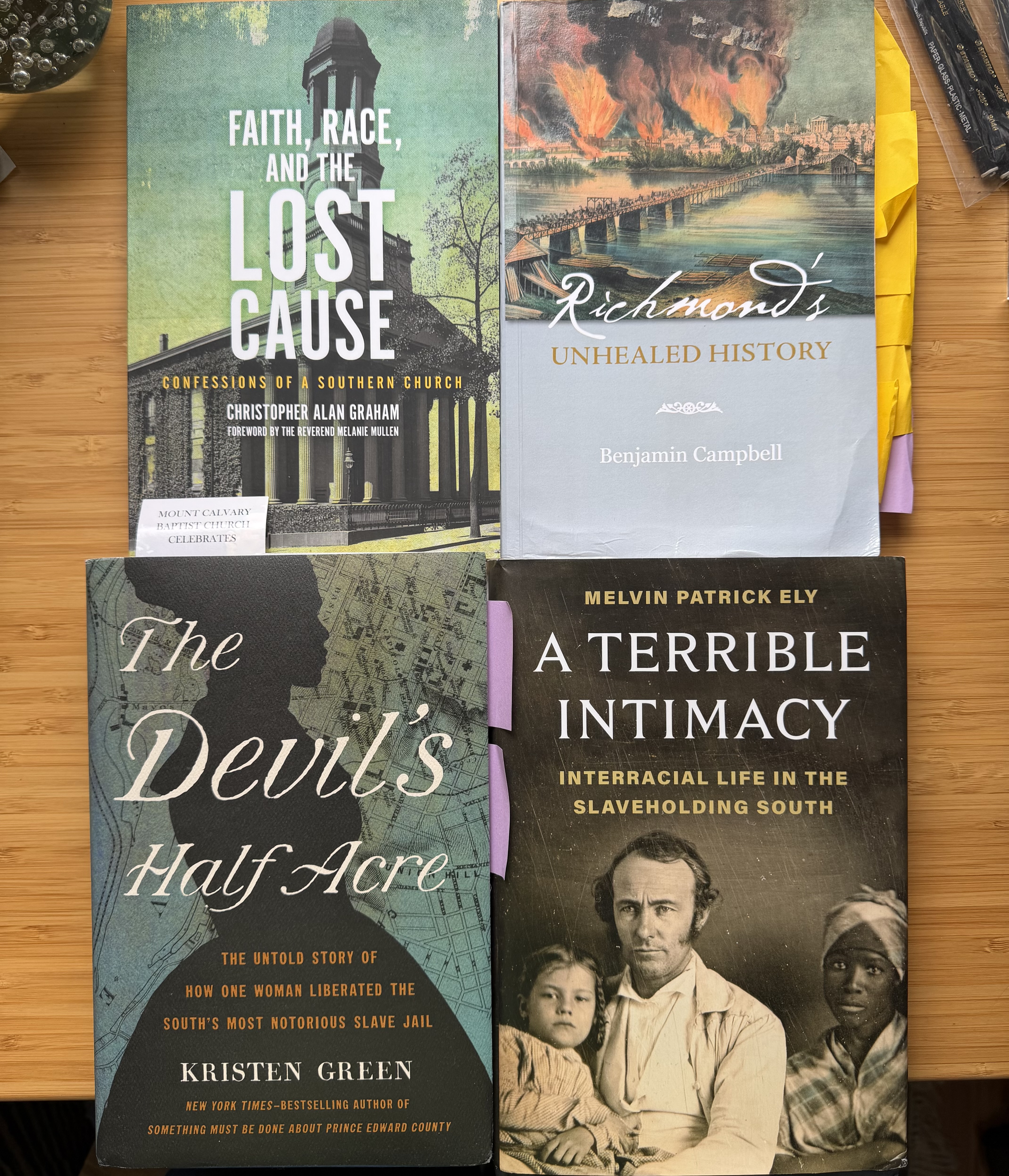
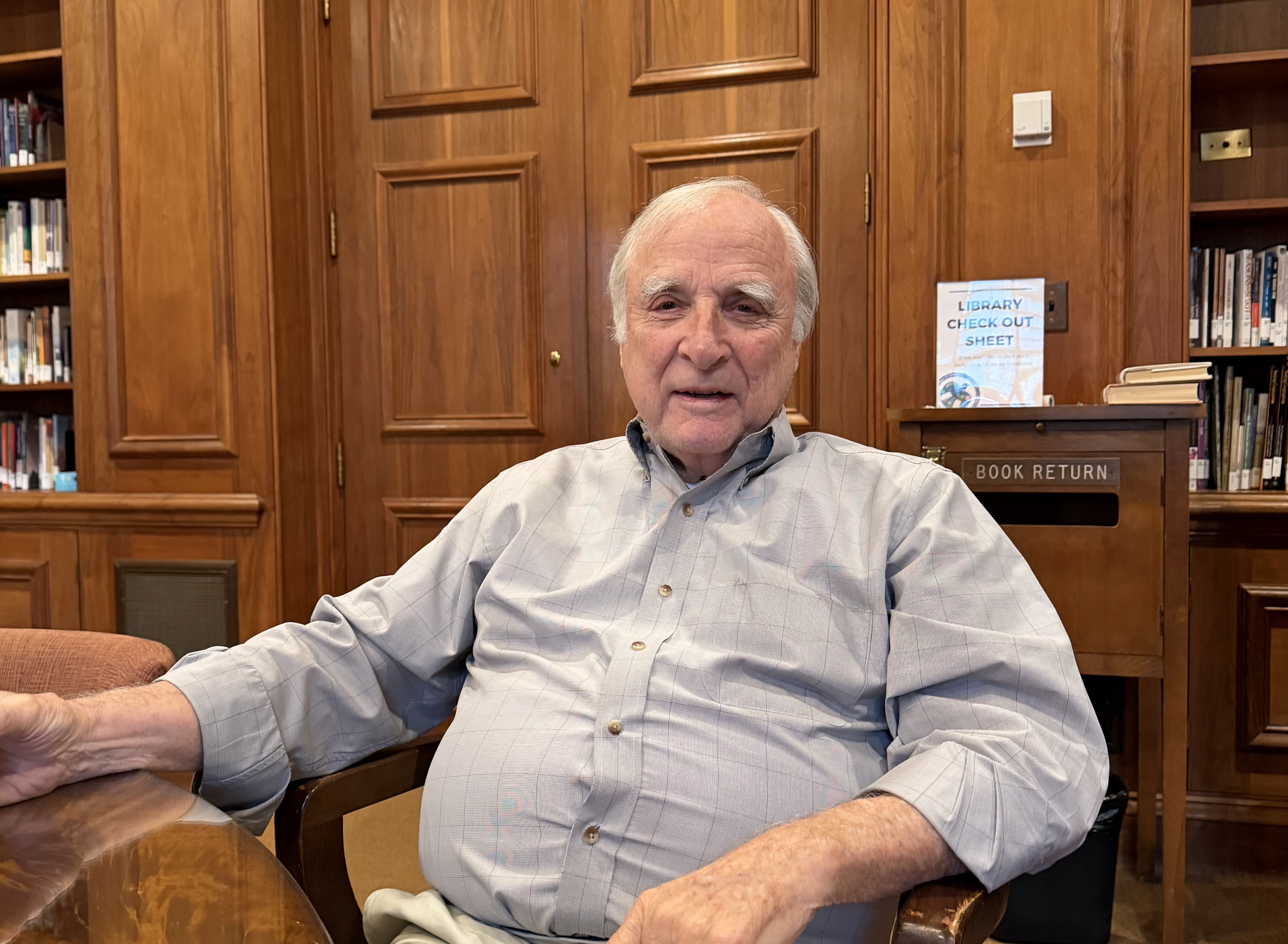
First up is this interview I had with the Rev. Benjamin Campbell, pastoral associate at the historic St. Paul’s Episcopal Church, pastor emeritus at Richmond Hill, civil rights activist, and author of Richmond’s Unhealed History. I interviewed him in the library of St. Paul’s, and you can hear church bells in the background.
Our conversation covered a lot of territory, from him quoting from “The Second Coming” by Irish poet William Butler Yeats, invoking the White Lion (the English privateer ship in 1619 that is the first documented arrival of enslaved Africans in what became the United States), Richmond’s infamous Lumpkin’s ‘slave jail’ known as the Devil’s Half Acre (changed to God’s Half Acre by his enslaved wife Mary after his death/after the Civil War when she turned the building into a school for Black students), the uncovering of Richmond’s prominent role in the domestic slave trade, powerful white Virginians fighting desegrgation of schools, and the white gentrification of the traditially Black neighborhood of Church Hill (where I worked as a field/public health nurse in the turbulent 1980s).