What Happens To a Dream Deferred?

IMG_0703
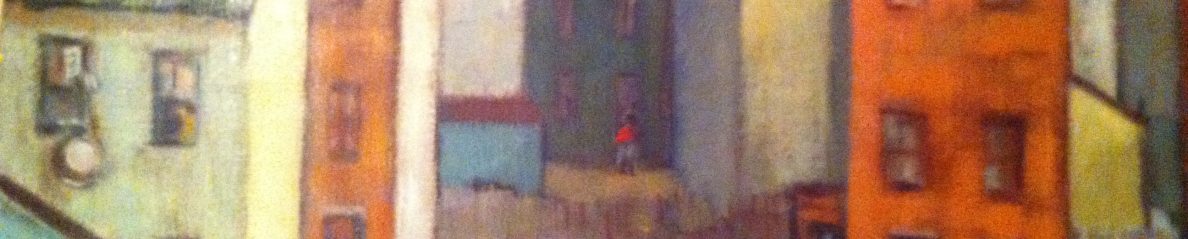
Baltimore Street Corner. Photo credit: Josephine Ensign 1992

The title of this blog post is the first line of Langston Hughes’ powerful poem ‘Harlem.’ NYC-based poet/novelist, teacher, and photographer Don Yorty has made an excellent short video/reading of ‘Harlem’ linked here.

I recognize that it is a bit ‘too politically correct’ and in a way even cowardly to be a white person writing about the persistent problem of racism in the U.S. on the official Martin Luther King, Jr. government holiday. It’s not as if the topic of racism–of having conversations about racism–should occur in ‘polite’ (as in white) company on only one day of the year. Racism is, of course, back in the national spotlight due to the 2014 high-profile cases of race-based police brutality in Ferguson and beyond. I’ve written about the intersection of racism and health in previous posts, most recently in “Virginia Relics Part One: Racism” (9-15-14). Last year when I was teaching community health in New Zealand and learning about their indigenous Maori population and racism, I wrote a post “Cultural Safety: A Wee Way To Go”  (3-12-14). In that post I included information and links to two wonderful video resources I use in teaching about racism: 1) Cultural Humility: People, Principles and Practices by San Fransisco State professor Vivian Chavez; and 2) Shaun Scott’s short documentary A Really Nice Place to Live (about the historical context of racism in Seattle). I use these videos in combination with the excellent PBS series Unnatural Causes‘ episode “When the Bough Breaks,” which highlights the serious health effects of racism on African American women and their infants. Together, these three videos help spur important (and oftentimes emotionally-charged) classroom discussions about racism.

Happy (thoughtful, reflective, peaceful) MLK Day.

Resources:

  • A good and clearly-written article “Why There’s No Such Thing as Reverse Racism” (Daily Kos, by ‘hepshiba’ 7-15-2010). Helps to clarify that thorny and oft-quoted statement that black people can’t be racists.
  • Anything by Dr. Camara-Jones of the CDC. Especially her cliff analogy of determinants of health/where racism comes into play (low-budget but good video of it here); and her Gardner’s Tale/three levels of racism (video of it here).

Pretty (Shouldn’t Have to) Hurt

IMG_3224
Cover Girl lipstick ad/The Ladies Home Journal June 1964


Greeting me at my favorite local independent bookstore this past week was this interesting ‘Health’ section display:IMG_3203Being skinny (or at least dressing skinny), wearing dark red lipstick and super expensive perfume equals health for women? I realize the display is meant to cash in on popular New Year’s resolutions within our culture, but I still find it provocative on many different levels. I was sorely tempted to add ‘hazards’ under ‘health’ but didn’t want to get evicted from the bookstore.

By now the health dangers of the skinny woman syndrome are well known. Eating disorders such as anorexia, bulimia, yo-yo/extreme/bizarre dieting. Expensive, dubiously medically-regulated, and sometimes fatal cosmetic surgeries. Beautiful Beyonce’s song “Pretty Hurts” does a good job of summing up this topic.

Something seemingly simple and innocuous as lipstick… How many people know that lipstick is a public/environmental health issue? Many popular brands of lipstick contain lead and at least eight other metals known to be harmful to humans. The FDA does not have any regulatory authority over the cosmetics industry, leaving the the 58 billion dollar a year industry (in the U.S./estimate for 2014) to self-regulate. Deborah Blum wrote a NYT Well blog article on this: Is There Danger Lurking in Your Lipstick? (8-16-13). The Campaign for Safe Cosmetics has good, up-to-date information on this issue. And the health story on perfume is perhaps even more depressing, so I will skip it and let you read all about the petroleum products, allergens, neurotoxins, and synthetic musks here.

For some historical perspective (and some sad-funny stuff), I stumbled across my mother’s copy of The Ladies Home Journal, the June 1964 Special Issue. It features an article by Betty Friedan ‘Woman: The Fourth Dimension.’ Written a year after she published the now classic second-wave feminist book The Feminine Mystique,  her ‘fourth dimension’ of a woman’s existence is “woman as a person herself, employing all her intelligence and abilities in a changing world.”

The numerous ads for beauty products in this special Fourth Dimension edition are quite telling. Besides the one for lipstick I’ve included at the beginning of this post, here are a few that stand out as both Mad Men retro and disturbingly not-so-retro (and yes, there were only white people in this magazine): IMG_3214


IMG_3208


Skin cancer anyone?


Here is a full-page fashion shot of a ‘four-dimensional woman’ as a beautifully coiffed and attired artist (my mother, who was a professional artist with an MFA dog-eared this page–hopefully only out of amusement): IMG_3221


But this photo and caption included in Friedan’s article puts a new spin on better living through chemistry and on the value of an education (the caption says “Velta Sparnins, mother of three children, attends college on a scholarship”): IMG_3219

Hope: Dream a Better World

IMG_1230 - Version 2Amidst all the Year in Reviews and New Years Resolutions and post Christmas/Hanukkah/Kwanzaa/Festivus consumerism hangovers, I’m thinking a lot about the power of hope. The power of dreaming a better world. The power of dreaming and then doing something concrete to help bring about a better world. Direct service, political advocacy, and activism: we need a healthy combination of people involved in all three areas of civic engagement. And just because we might be drawn to one area (like direct service) and repelled by another (like in-your-face activism) doesn’t mean that they aren’t all equally as important.

Brought to you by the U.S. government (with the amusing tagline “Government made easy”) is the website page “Popular New Year’s Resolutions.”  They list thirteen resolutions with the first being the all too familiar ‘lose weight’ and the second being ‘volunteer to help others.’ The ‘volunteer to help others’ links to the Tumblr blog for the Corporation of National and Community Service, the federal agency responsible for national service programs like AmeriCorps and SeniorCorps. Continuing with the hope-inspiring web-surfing, I discover Tublr’s Year in Review 2014/top blog posts and sites. Under ‘activism’ I find some terrific blogs, including Seattle-based Citizenship and Social Justice, CultureStr/ke (arts and activism around immigration), Pioneering Justice (photojournalism on human rights issues), and 100 Days of Activism. There are also some amusing blogs, such as Cats Can’t Be Vegan, Idiots.

Art and writing as activism. The living writer who best exemplifies what it means to dream a better world (and to write great literature about it) is science-fiction writer Ursula Le Guin. This year at the National Book Awards, Le Guin received the Medal for Distinguished Contribution to American Letters. In her powerful acceptance speech (YouTube video of it here), she states:

“Hard times are coming, when we’ll be wanting the voices of writers who can see alternatives to how we live now, can see through our fear-stricken society and its obsessive technologies to other ways of being, and even imagine real grounds for hope. We’ll need writers who can remember freedom — poets, visionaries — realists of a larger reality”

For a good article related to her speech, read Bill Moyer’s article “Ursula Le Guin’s viral video: we will need writers who can remember freedom” 12-27-14. And for a link to the complete transcript/copy of her speech, Le Guin has it on her author website here.

Happy New Years. Resolve to dream (and write and create and serve and agitate) a better world.

Resource:

A terrific training module/activity guide I use (in an adapted form) in my undergraduate community health course is the Bonner Foundation’s Bridging the Gap Between Service, Activism, and Politics.

Complicating Forgiveness

IMG_2754Forgiveness sounds so warm and fuzzy and facile. And religious: Forgive us our debts (or trespasses) as we forgive our debtors (or trespassers)…. Like a joyous sunflower turning its laughing seedy face toward the warmth and the light.

But wait. That sunflower looks decidedly sinister. Could there be a dark, prickly underbelly to forgiveness? Is forgiveness always a good thing?

These are questions I’ve been asking myself as well as ‘asking’ various experts through an extensive search of the academic literature related to forgiveness (mainly within the fields of philosophy, psychology, and counseling). These questions have led to more questions: Can you forgive someone or something like an institution–a hospital system for instance–for wrongdoing in the absence of an admission of guilt and a sincere apology? What constitutes a sincere apology? What constitutes sincere forgiveness versus a too-quick-to-give (or forced into) ‘cheap grace’ forgiveness? Do you have to forget to forgive? What is self-forgiveness and why is it important? What are the power dynamics, including gender dynamics, embedded in forgiveness? Who has the ‘right’ to forgive? Are there some instances of wrongdoing (like the atrocities of the Holocaust and of various genocides around the world, or like severe child abuse) that are of such great magnitude that they are unforgivable? Can there be reconciliation without forgiveness?

Forgiveness and its close relations of shame, guilt, righteous indignation, anger, revenge, restitution, reconciliation, and restorative justice are highly relevant to health care, to public/community health, and to all health care providers. There are the all too frequent medical errors leading to patient injuries and deaths. There are the ‘second victim’ casualties to health care providers involved in medical errors. There are the just and unjust cultures of hospitals, medical systems, and health regulatory boards. There are the U.S. Public Health Services’ infamous Tuskegee Syphilis Study and its lingering effects. There are worsening environmental justice issues, racism, gender-based violence, police brutality, and global health inequities.

Within health care provider education in the U.S. we now include course content and interprofessional mock trainings on ‘error disclosure.’ We try to identify and intervene with incompetent or ‘bad apple’ students. We have student counseling services for students struggling with emotional issues. We have (or rather we should have) faculty development trainings on how to provide clear, constructive student performance feedback in a supportive, non-shaming way. But we don’t really have a place for open discussion of forgiveness, shame, vulnerability, and uncertainty. We’re all about measuring and having students attain ‘competencies.’

The closest I ever come to teaching about forgiveness, vulnerability, and shame is when I touch on the concept and practice of cultural humility in my community health course (the best description of cultural humility is the short video Cultural Humility: People, Principles and Practice by Vivian Chavez). As social worker, therapist, and researcher Brene Brown points out, we can’t have constructive conversations about race, class, power, and privilege without addressing shame. If you haven’t already seen it, I encourage you to watch her 20 minute TED talk “Listening to Shame.” It reminds me of how much I love the profession of social work.

Out of the thirty or so scholarly books and articles I have read on the topic of forgiveness, here are the ones I found most helpful, provocative, and powerful:

  • The Sunflower: On the Possibilities and Limits of Forgiveness, by Simon Wiesenthal (Shocken Books, 1976, 1997). The first part of this book is Wiesenthal telling the story of his experience as a Jewish prisoner in a Nazi concentration work camp in Poland. He was picked at random by a Nazi nurse to visit a young, dying SS officer who wanted to ‘confess his sins’ to a Jewish person and ask for forgiveness. Wiesenthal sat for hours by the patient’s beside listening to him–at one point he brushed a fly away from the patient’s bandaged head–but he stayed silent and did not forgive him. The episode bothers him and he asks people what they would have done in the same or similar situation. The remainder of the book is comprised of responses from various theologians (Jewish, Christian, Buddhist, and Muslim) and philosophers. This is a book that will haunt you long after you’ve finished reading it.
  • Before Forgiving: Cautionary Views on Forgiveness in Psychotherapy, edited by Sharon Lamb and Jeffrie G. Murphy (Oxford University Press, 2002)–and especially Sharon Lamb’s chapter “The Good, the Bad, and the Ugly: Psychoanalytic and Cultural Perspectives on Forgiveness.” She writes about power dynamics and gender politics vis-a-vis forgiveness. “Gender conformity then is ‘met’ when a woman forgives her wrongdoer and lets go of resentment, even at the cost of self-respect.” (or safety as she add in the case of abuse and intimate-partner violence).
  • “Shame, guilt, and the medical learner: ignored connections and why we should care,” by William Bynum and Jeffrey Goodies, Medical Education, 2014, 48:1045-1054.)
  • For an amazingly rich sci-fi take on the topic of forgiveness, there is Ursula Le Guin’s book Four Ways to Forgiveness, the first part of which is titled “Betrayals.”
  • In the realm of fiction, Naseem Rakha’s novel The Crying Tree (Broadway, 2009) is carefully researched and beautifully written. It’s a fictionalized account of the complicated grief process of the mother of a murdered teenage son who forgives and befriends her son’s murderer while he awaits his execution on death row. This novel is based on Rakha’s work as a journalist covering the death penalty in Oregon.

Of God and Toilets

Public_VIP_latrine_(photo_taken_in_2011)_(5529288428)As I finish grading student papers for an undergraduate  community health course, I am reminded of the two most influential courses in all of my undergraduate and graduate education: 1) Comparative World Religions taught by Clyde Holbrook, Oberlin College in 1980; and, 2) Water and Sanitation taught by Clive Shiff at Johns Hopkins School of Public Health in 1992 (in which we applied a problem-based learning/case study approach to a Zimbabwe village water and sanitation project in a team-based approach with health care providers from mostly resource-poor countries). These two courses on seemingly disparate topics were the most personally transformative for me in terms of expanding my worldview and enhancing my critical thinking skills. Those, in turn, are two of the most important educational outcomes or standards that I aim to teach to in my work educating future nurses and other health care professionals.

As a society, as a world, what do we most want and need in health care providers? Yes, of course, we want and need intelligent, highly competent providers who are up-to-date on all of the latest scientific, evidence-based practice guidelines. But robots can do that. What we really want and need are flesh-and-blood, compassionate, grounded, and questioning humans who understand at a visceral level what it means to face existential questions of life and death; what it means to face complex personal and community-level ethical issues; and what it means to wrestle with the visceral, practical questions such as how to best to take care of basic bodily functions (like pooping and peeing) and how a community can obtain safe, clean drinking water (and the complex political, cultural, social, and historical issues related to that access).

In order to have more health care providers capable of such things, in order to ‘humanize health care,’ we need to have better support of the humanities within basic primary education, undergraduate education, graduate education, and continuing education…. Ah yes, and we need to have more health care (especially nursing) educators who have meaningful exposure to, education in, and orientation towards the humanities. By humanities I mean “the study of how people process and document the human experience” (source: Stanford Humanities), which typically includes the academic disciplines of: philosophy, literature, religion, art, music, history, and language/linguistics. Humanities and a ‘liberal arts’ education are foundational to our country and to democracy; they are also currently being undermined by a focus on ‘practical’ jobs-based education in STEM (non-humanities) subjects: Science, Technology, Engineering, and Math. As an important counterpoint to that trend, I encourage you to view the brief (7 minute) video “The Heart of the Matter” by the American Academy of Arts and Sciences (to accompany their 2013 report of the same name).

Remember to ask the important questions: who are we? where did we come from? why are we here? where are we possibly going? and where is a safe place to poop?

What is Public Scholarship?

IMG_3174My irreverent answer: work done by nerdy, bookish, abstruse (yes, abstruse), people with way too much formal education who can get over themselves enough to care about the ‘real’ world, what’s going on in it, what they might have to offer it on a more practical level, and what they can learn from that big, scary ‘real world.’

Here is one of the more reverent official answers:

“Publicly engaged academic work is scholarly or creative activity integral to a faculty member’s academic area. It encompasses different forms of making knowledge ‘about, for, and with’ diverse publics and communities. Through a coherent, purposeful sequence of activities, it contributes to the public good and yields artifacts of public and intellectual value.” (From: Ellison, J., and T. K. Eatman. 2008. Scholarship in Public: Knowledge Creation and Tenure Policy in the Engaged University. Syracuse, NY: Imagining America.)

The photo above is of me looking very happy yesterday at the University of Washington Odegaard Library (first floor) in front of my public scholarship multimedia exhibition Soul Stories: Homeless Journeys Told Through Feet.
This is a collection of poetry, prose, photographs, and digital storytelling videos about my work as a nurse providing health care to people marginalized by poverty and homelessness. I understand homelessness at a visceral level, having lived through it myself as a young adult. I also readily acknowledge that just because I ‘made it out of homelessness’ doesn’t mean everyone can, nor that it is an easy thing to do, especially within our society.

The Soul Stories exhibition will be at Odegaard Library (opposite Suzzallo Library on ‘Red Square’) through March 20, 2015. Odegaard Library is open to the public during regular library hours. Many thanks to the wonderful librarians at Odegaard who opened this space for me, and thanks to 4Culture for helping to fund part of this project. I was looking happy in this photograph because this has been the most challenging, fun, and soul-satisfying scholarly project so far in my career.

Public or community-engaged scholarship has never been valued by ‘high brow’ university types, especially not at research-intensive universities. It generally doesn’t ‘count’ as a valid activity for those pursuing graduate degrees. It generally doesn’t get you tenure. But that all seems to be changing, albeit at the achingly slow speed of any change within higher education. The catalyst for this change seems to be less from sudden altruistic enlightenment on the part of the academy, and more from public pressure for universities to show tangible positive impact at the local, national, and international levels. Within medical science scholarship, you can see this outside pressure manifested in the embrace of ‘translational research.’ Research within the realm of public scholarship doesn’t need to be translated.

Within the area of health-related public scholarship, a terrific resource I have used throughout my career is the Community-Campus Partnerships for Health (CCPH).  Check out the free, no membership required resources on their website, especially CES4Health, for peer-reviewed products of community-engaged scholarship.

Cultural and Spiritual First Responders

We’re used to hearing the term ‘first responders’ whenever there’s any news coverage or conversations about disaster/emergency preparedness, response, and recovery efforts. And we’re used to seeing images (like the one below) of the typical types of official first responder personnel and their equipment: firefighters, police officers, EMS, Search and Rescue, etc. FEMA_-_37224_-_First_responders_in_Texas

This past year I’ve become more aware of the importance of cultural and spiritual first responders, especially in terms of the resilience of communities. Spiritual first responders we may think of as only pastors, priests, imams, and other religious leaders. These people are important sources of solace and ethical guidance. But the cultural and spiritual first responders I’m referring to are the artists and writers within communities who aid in our attempt to make meaning out of catastrophe and chaos, to find ways to not only survive but also thrive in the midst of adversity. They point the way to healing, to the alchemy of remembrance and forgiveness, to resilience.

I’m currently writing an essay ‘Bearing Witness’ about these cultural and spiritual first responders, and about the sticky ethics of witnessing. In the spirit of Thanksgiving, I want to share with you some photos I’ve taken (within the past year) of powerful public artwork in response to the Christchurch earthquakes and ongoing recovery. I am very thankful for the inspiration, perspective and meaning-making they have provided for me. I include the artist’s name when I’ve been able to establish who they are. These are in addition to ones I shared in a previous blog post “Bounce Back” (February 7, 2014) when I was living and working in New Zealand.

DSC00958 - Version 7I believe this street art mural on the side of a partially-demolished building in downtown Christchurch was part of Canterbury Museum’s ‘Big Walls’ street art project.  I haven’t been able to discover who the artist is but I love this arresting piece. Is the hand held up to stop you from coming too close into the danger zone? Is it calling on you to halt your strange disaster walkabout and reflect on what you are seeing, on what you are doing here?

Peter Majendie’s ‘temporary’ installation “185 Chair Memorial” set up in an empty lot in downtown Christchurch, on land where there had been a Baptist DSC00990Church before the earthquakes destroyed it. (The A-frame white building in the background of this photo is the gorgeous “Cardboard Cathedral” by Japanese architect Shigeru Ban.) Majendie’s original title for his chair installation was “Reflection of Loss of Lives, Livelihood and Living in Neighborhood” and was initially set up in February 2012 for a week to mark the first anniversary of the most devastating Christchurch earthquake. Each of the 185 white-painted chairs represents a person killed by the earthquake. There are desk chairs, bar stools, lawn chairs, stuffed lounge chairs, folding chairs, rocking chairs, children’s chairs, director’s canvas chairs, infant car seats, infant highchairs, and wheelchairs. The sign encourages people to sit quietly in a chair to which they are drawn. “The installation is temporary—as is life,” the artist states.

DSC01214Love this one! “Weaveorama” is an interactive street art installation by textile artist Hannah Hutchinson. Part of the Gap Filler project in Christchurch, it is a giant public loom with a sign that says “join with us in creating a new city fabric” and encouraging people to add their found or recycled objects. I especially loved the addition of the pink satin bra. Finding a place for appropriate humor and whimsy is important for individual and community resilience.

Be Very Afraid

IMG_3124Or be at least a little bit afraid: not so afraid that you become paralyzed with fear and not so little afraid that you don’t do practical things to better prepare yourself (and your family) in case of disaster/emergency. Aim for being ‘just right’ afraid.

Public health messaging about ‘appropriate’ disaster preparedness has been a topic of fascination for me since teaching my community health course in New Zealand this past winter. (See my previous ‘New Zealand Postcards’ blog series, especially ‘Disaster Tourism; All Right?’ and ‘Disaster Preparedness: Lions and Tigers and Zombies and Earthquakes, Oh My!’) When I returned to Seattle in April I had resolved to practice what I preached in this regard and make a disaster preparedness kit for our home. Seven months later I’ve finally put one together.

This cute little red ‘lunchbox’ disaster/emergency preparedness pack in the photo is one that got delivered to my university office this past week. A one-person 72-hour survival kit. Inside it has pouches of water, high-energy food bars, a mini first aid kit, a whistle, a flashlight/extra batteries, hand sanitizer, an emergency survival blanket, maxi pads, hand warmers, and a poncho (this is Seattle after all and we like our rain gear). The CDC Emergency Preparedness and Response website and FEMA’s ‘Ready’ website  recommend having smaller grab-and-go personal disaster preparedness kits like this one at work/school, in your car, or other places where you spend a lot of time. They recommend having a larger ‘family-sized’ disaster preparedness kit at home and they provide lists of recommended items for the kits. Some of the recommended items on the two lists are the same (like water and food), but many of the items on the lists differ. An interesting but largely unsurprising fact. I prefer the CDC list. The American Red Cross survival kit list on their website seems to follow the CDC list and both seem to have taken health literacy factors into account.

Through the process of researching and putting together a household disaster/emergency preparedness kit, I’ve realized the health and safety advantages of having camping and hiking as hobbies. Swiss Army knife. Check. Tent. Check. Portable water filtration kit plus iodine water purification tablets. Check. Sleeping bags. Check. Portable first aid kit with hand sanitizer. Check. Toilet paper and small plastic shovel for digging a latrine. Check. Rain poncho. Check. Hand-cranked and solar-powered flashlight and NOAA weather radio. Check.  All stored in one easily-accessible place at home. Check. The only items I needed to add to my preexisting camping supplies were cans of food and water jugs. I now having a home disaster preparedness kit. In Seattle, if you could chose an ideal place to be when disaster strikes, I think it would be inside REI’s flagship store downtown.

I’ve realized that even basic home disaster/emergency preparedness is not an equal opportunity endeavor–it is mainly available to people with the resources to: 1) research and figure out what a disaster kit should include, 2) purchase the items (or purchase a ready-made kit), and 3) have a home in which to store the disaster/emergency preparedness kit.


Imbecile, Idiot, Cretin, Funny-Looking Kid

14866775264_dfcefee472_hIdiot, cretin, feeble-minded, moron, mongoloid, retarded, funny-looking kid: all accepted medical terms at different times in history. More recently, the accepted terms are mental retardation, intellectual, or developmental disabilities. People in pediatrics sometimes use FLK for “funny looking kid” to describe a baby or toddler whose face and head “just don’t look right,” but who don’t have an identifiable genetic disorder. I remember the first time I encountered FLK on a child’s medical chart in nursing school. I was shocked when my nursing instructor told me what it stood for. I was even more shocked that she didn’t find the term offensive. FLK seems to be a throwback to phrenology—that pseudoscience of belief that low foreheads and bumps on the skull can foretell the criminal and devious propensities of individuals.

I had relatives with mental illness and mental retardation. My father’s father and brother were tucked far away in the southern Appalachians of Tennessee: our family’s living skeletons in the closet. I was told that my Uncle Charles was retarded, and that my grandmother was convinced it was because she’d fallen down a flight of stairs when she was pregnant. My maternal great-grandmother raised Uncle Charles on her cotton plantation in rural Georgia, so Charles had a thick Southern drawl and was the most openly racist of any of my relatives. He also had a serious speech impediment, talking as if he had a partially paralyzed mouth. He laughed loudly at his own jokes, startling me by suddenly reaching over and tickling me under the chin or slapping me on the arm. As a child he frightened me; as a young adult he embarrassed me. By then he lived with my grandmother and drove a delivery truck for a cousin’s florist. With savant-like abilities in math, he had been tested at Emory hospital at age ten and assigned an IQ of seventy. He was considered feeble-minded, trainable, and partially educable.

In my childhood, we went to my grandmother’s house in Tennessee only at Easter, as if this were part of our family’s annual pilgrimage of penance, death, and resurrection. Grandmother’s house smelled of sick-sweet Easter lilies, slimy collard greens, and Cimmerian dust from the dirt-floor basement’s coal-piles. My grandfather had a mask-like face and lay in a tall four-posted bed staring at the ceiling. He talked infrequently and when he did, it was in staccato monosyllables. Poorly controlled diabetes and bipolar disorder had left him disabled. He frightened me more than Uncle Charles did. Grandfather was a lawyer but had lost his temper in court so many times he was relegated to library legal research. After he lost that job in the Great Depression, he spent his days playing chess at the YMCA, while my loquacious grandmother sold World Books door-to-door. This was the oft-repeated family story.

Southerners are often stereotyped as inbred imbeciles. My Northern-born mother would tell me stories of my father’s family when he wasn’t around—about the mental retardation and mental illness that my father had been able to transcend by escaping to go to graduate school in New York City. Once there, my father was required to take speech therapy to get rid of his speech impediment: his Southern twang. Both of my parents continuously corrected my speech, determined to prevent me from developing a marked Southern accent. My mother examined the official IQ and academic test scores of all four of her children. With every “ya’ll” that slipped out and every “B” obtained, I felt increasingly marked by the Southern blight. It wasn’t until much later in life, while caring for my elderly mother dying of cancer, that she informed me I was related to Varina Davis, First Lady of the Confederate States of America. My paternal great-great grandmother from the Georgia cotton plantation was Varina’s first cousin or something of the sort. I have not found an adequate place for that fact in my history.

When Words Were Poems

IMG_3604-a

Photo: (c) Lorraine Healy–an amazing Argentinian poet, writer, and photographer living and working on Whidby Island. Lorraine is the first person ever to have received a Green Card in the U.S. on the basis of being a poet.

I had the great pleasure of meeting, working, and living with Lorraine recently at Hedgebrook, a Gloria Steinem-spirited place of ‘Women Authoring Change.’ I was at Hedgebrook working on my Soul Stories collection of poetry and prose exploring the boundaries of narrative within health and healing in the context of trauma and homelessness. Surrounded by poets and the genius loci of Whidby Island (including of Double Bluff beach in the photo–where I walked almost every day), as well as being cut off from the time/mind suck of the internet, ‘poetry happened’ and this is one poem that came to me. It is, of course, a nod to Ralph Waldo Emerson’s “Every word was once a poem.” In the poem I probe the places ‘where narrative ends’ or ‘where narrative is not possible.’

There are human experiences beyond the reach of narrative. These are dimensions of experience that are what psychologist Donnel Stern calls ‘implicit knowing’ or the ‘unthought known’: they are there but not there; there but not available for reflective thought or verbalization. Yet these experiences of implicit knowing can be formulated, conveyed, shared and communicated through metaphor, poetry, art, photography, and gesture.

Embracing the times and places where narrative ends and poetry happens is not for the faint-of-heart. It is akin to the feeling of standing on the vanishing strip of shifting sand at the foot of a fast-eroding beach bluff.

When Words Were Poems (a choka–a form of waka/Japanese poetry)

When words were poems

our body’s understanding

was written in flesh;

a repose, a prayer whispered

in answer to awe.

Round marbled babbles sang praise,

danced the sun on waves.

Now each word is a poem,

draw knowledge softer,

suckle life from all splinters,

embrace shadows beyond words.