Happy World Health Day: Don’t Pass the Salt

English: Checking the blood pressure by using ...
English: Checking the blood pressure by using a sphygmomanometer and stethoscope. (Photo credit: Wikipedia)

NYC Mayor Bloomberg is continuing his efforts to create an enabling environment for health by including sodium reduction in food in his public health campaign. Some people (and some states like Mississippi) complain that Mayor Bloomberg is creating a nanny state; others applaud his efforts. His sodium reduction efforts fit with this year’s World Health Day theme of hypertension awareness and control.

From the WHO World Health Day website http://www.who.int/world-health-day/en/:

“This World Health Day, 7 April 2013, WHO and partners focus on the global problem of high blood pressure. Though it affects more than one in three adults worldwide, it remains largely hidden. Many people do not know they have high blood pressure because it does not always cause symptoms. As a result, it leads to more than nine million deaths every year, including about half of all deaths due to heart disease and stroke.

Everyone can take five concrete steps to minimize the odds of developing high blood pressure and its adverse consequences.

  • Healthy diet:
    • promoting a healthy lifestyle with emphasis on proper nutrition for infants and young people;
    • reducing salt intake to less than 5 g of salt per day (just under a teaspoon);
    • eating five servings of fruit and vegetables a day;
    • reducing saturated and total fat intake.
  • Avoiding harmful use of alcohol i.e. limit intake to no more than one standard drink a day
  • Physical activity:
    • regular physical activity and promotion of physical activity for children and young people (at least 30 minutes a day).
    • maintaining a normal weight: every 5 kg of excess weight lost can reduce systolic blood pressure by 2 to 10 points.
  • Stopping tobacco use and exposure to tobacco products
  • Managing stress in healthy ways such as through meditation, appropriate physical exercise, and positive social contact.”

Managing stress in healthy ways. I’m thinking of how lower socioeconomic status is directly related to increased stress. Recommending meditation to poor people as a way to reduce stress sounds quite condescending, almost like the proverbial ‘let them eat cake’ thing. Exercise and positive social contact make more sense.

Heart’s Oratorio

It is Spring Break and instead of heading to warm beaches I’ve been indulging in a massive reading intensive, staying up into the wee hours of the morning IMG_0775finishing book after book as if they were bonbons. Some have been disappointing reads (like biting into a chocolate bonbon only to discover a nasty fake cherry filling): Kathryn Schulz’s Being Wrong, Ryszard Kapuscinski’s Travels With Herodotus, and Michelle Kennedy’s Without a Net). Others have been rewarding, such as Colum Toibin’s The Blackwater Lightship and Ivan Turgenev’s Fathers and Sons. But one book stands out as a keeper and worthy of future re-reads and study: Mary Oak’s Heart’s Oratorio: One Woman’s Journey through Love, Death, and Modern Medicine (Goldenston Press, 2013).

First, a disclaimer. I know Mary from my monthly writing group—the Shipping Group—that meets at my favorite bookstore, Elliott Bay Book Company. Mary is a quietly strong and centered woman. But that is not why I love her book. I love her book because it is beautifully written and tells a powerful and unique medical narrative. I love her book because it helped me to view the medical system from a different perspective.

Mary has died twice in the past decade. The first time she died was in 2007 in the Houston airport while running to catch a connecting flight to Paris. She collapsed in the airport terminal. Otherwise healthy but having asymptomatic ‘athlete’s heart,’ she experienced sudden cardiac death, then was brought back to life through the actions of emergency medical personnel and hospital treatment. Back home in Seattle, Mary underwent two cardiac surgeries at Northwest Hospital. During the second surgery, to implant a cardiac defibrillator, Mary’s heart stopped once again. But that is just the background medical drama of her story. The real story is Mary’s spiritual journey through it all. Mary comes from a long line of homeopath and Christian Science healers and had avoided most all things allopathic. But as she writes, “Nothing like sudden death to invite a different perspective.” Mary’s book is also a love story: her love and care for her children who may have inherited her cardiac condition, as well as her love of David who becomes her husband and cares for her through her illnesses.

Although I neither share Mary’s spiritual beliefs nor her long family history of spiritual healers, I was drawn into a deeper understanding of and respect for them through her story. I can envision using her book in the nursing education that I do. Many parts of Mary’s medical narrative occurred right here in Seattle in hospitals where my students are trained and may eventually work—so it is literally close to home. Mary describes walking past my own university office (in the world’s largest and ugliest university building/photo attached here) on her way to find her medical records:

“Then I walk city blocks’ worth of narrow hallways with low ceilings and polished tan vinyl floors. I pass countless numbered doors. Only one is open: to a room of legless and armless dummies on the floor for a CPR training. No one is there. As I walk past various laboratories and offices, I wonder how much debt I will incur with this latest round of medical consultations. Will I live to pay it off?”

Becoming A Nurse: Nurse Writer Panel Discussion

You are all invited/open to the public:

Becoming a Nurse

Nurse Writer Panel Discussion and Reading

Thursday April 18th 6-8:30pm

Suzzallo Library Smith Room

6-6:30 Light Refreshments

6:30-8:30 Panel Discussion, Reading, and Book Signing

I Wasn’t Strong Like This When I Started Out: True Stories of Becoming a Nurse

Edited by Lee Gutkind

In Truth Press. Pub. Date: April 2, 2013

This collection of true narratives captures the dynamism and diversity of nurses, who provide the vital first line of patient care. Here, nurses remember their first “sticks,” first births, and first deaths, and reflect on what gets them through long demanding shifts, and keeps them in the profession. The stories reveal many voices from nurses at different stages of their careers: One nurse-in training longs to be trusted with more “important” procedures, while another questions her ability to care for nursing home residents. An efficient young emergency room nurse finds his life and career irrevocably changed by a car accident. A nurse practitioner wonders whether she has violated professional boundaries in her care for a homeless man with AIDS, and a home care case manager is the sole attendee at a funeral for one of her patients. What connects these stories is the passion and strength of the writers, who struggle against burnout and bureaucracy to serve their patients with skill, empathy, and strength.

Panel will include an interview with Theresa Brown who writes for the NYT Well Blog. Participants include Josephine Ensign, DrPH, Associate Professor, Department of Psychosocial and Community Health, whose essay Next of Kin appears in the anthology.

This project was supported, in part, by an award from 4Culture  4culture_color

University of Washington Health Science Library   logo-hsl-admin-color-printer

Into the Sunset

dadatbeachIn October 2010 I first wrote about the journey of my elderly father through declining health and the healthcare maze. In my blog post titled A Practical Man and Modern Medicine this is how I started his/our story:

Today on the phone, my 87-year-old father asked me to be his patient advocate. He is facing tough health care decisions over the condition of his heart, and is scheduled for surgery in a week. He is a practical man, bright, charming, and articulate, with no cognitive deficits that I can detect. He told me where his Living Will and Advanced Directives are, where he wants his body donated for medical research, and what to do when his CD matures (he’ll be in surgery) so that he can roll it over to a money market account. He says he needs access to the money for his after-hospital care, in case he survives surgery. I am thinking about the health policy issues within all of this: 1) heart failure accounts for the largest portion of Medicare expenditures, 2) none of his doctors have talked with him about what all is involved with this surgery, or what quality and quantity of life he can hope for afterward, and 3) home care provided by family members is not well supported (financially and otherwise) in our country. As his daughter and as a family member embedded in the health care system, what do I do with this information?

Almost three years later I still don’t know what to do with this information. I have discovered the healthcare system to be even more bewildering and capricious than I had imagined. I last wrote about my father this past fall in the post Transitions (October 22, 2012), when I was back in Virginia helping him survive the rough crossings between four different health care settings in six weeks—the last one being the calmest and sanest of all—home hospice. My father was weak, oxygen-dependent, and had advanced wasting from end-stage congestive heart failure. His cardiologist didn’t expect him to live much past Christmas. The day after hospice started my father used his walker to get from his hospital bed in the living room to the studio in the back of the house. Once there he strapped himself into his recumbent exercise bicycle and started “getting back into shape again.” We all thought he was nuts, but decided if he wanted to die while riding his bike off into the sunset of the studio that was his choice.

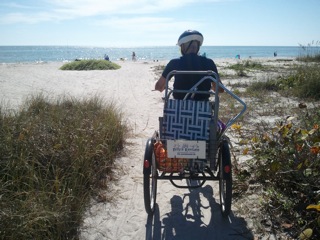
Since then he has confounded his cardiologists who say that by all objective measures my father should be so physically disabled as to be bed bound. Instead, he once again ‘graduated’ out of home hospice and as I write this he is riding his ‘real’ bicycle off into the ‘real’ sunset on a beach in Florida to meet up with friends for Happy Hour, sans alcohol for my teetotaler father. The photo to prove it was taken by my niece who is his caregiver for a few weeks.

Clearly my father’s story is not over, even though he has finished writing his memoir in barely decipherable handwriting on ten legal pads, which are in the mail to me. My father wants me to transcribe them and make into a book. “After all, this whole memoir business was your idea,” he said to me. He wants to proofread the final draft to make sure I didn’t change any of his words.

Last fall I wrote an essay titled Home Death about my experiences with the healthcare system, as I tried to uphold my role as health care advocate and proxy for my father. It was published recently in Johns Hopkins Public Health: The Magazine of the Johns Hopkins Bloomberg School of Public Health, Special Issue 2013. You can read it here.

Head, shoulders, (teeth), and toes….

Dentistry logo
Dentistry logo (Photo credit: Wikipedia)

Of all parts of the human body, only feet and teeth have their own separate health care providers. Feet have podiatrists (although they also have orthopedists/medical specialists). Teeth have dentists and only dentists—there are no medical specialty fields that deal with teeth. Oral surgeons may do some crossover work in medicine, but in the U.S. at least they are still considered dentists. As we all know from living in/with our own bodies, feet and teeth have a lot to do with our overall health. I’ll deal with feet in some future posts, but today I want to take a closer look at teeth and oral health.

First of all, why are dentistry and medicine so separate? That seems to stem from a historical artifact, having to do with the history of Western Medicine, the separation of physicians (higher class) from surgeons (lower class, tied to trades). Surgeons—including ones who did crude dentistry—tended to be barbers, blacksmiths, and silversmiths. Supposedly Paul Revere, our Colonial patriot and silversmith also dabbled in dentistry. Revere developed the field of forensic dental science. The father of dentistry is considered to be the 17th Century Frenchman Pierre Fauchard. He encouraged the gargling of human urine as prevention of dental carries. I assume this was before the concept of minty fresh was popularized.

The continued separation of dentistry and medicine is problematic on many levels. It explains why we have separate medical and dental health insurance industries in our country. It explains why dental insurance and dental care are so expensive, and why dental care is viewed as a luxury item available mainly to the rich. It explains why the American Dental Association is engaged in a turf war trying to block the development and expansion of so-called dental mid-level providers (also called “supervised dental extenders” or “dental therapists.”). It explains why nursing and medical students get little to no education or training in oral health.

Dental problems lead not only to pain, infection (including fatal infection), and tooth loss, but they also contribute to the increased risk for serious medical conditions such as diabetes, heart disease, and poor birth outcomes. Poor people, persons of color, immigrants/refugees, and people living in rural areas of our country have a higher burden of dental problems and less access to dental care. In 2009 (latest available stats I could find) there were 830, 590 emergency room visits in our country specifically for dental problems; this was a 16% increase from 2006. The overwhelming majority of dentists in our country are located in affluent suburbs, and most refuse to treat Medicaid patients. The Healthy People 2020 report includes oral health as a leading indicator of U.S. population health, the first time oral health has been included in our national health guidelines.

The ACA has included children’s dental care as an essential health benefit, but worrisome loopholes in the proposed implementation of the law have developed. As currently worded, dental care would be ‘essential’ as long as dental coverage is offered as an ‘add on,’ meaning that parents could opt out of dental care without being assigned penalties. There is also concern that individual and small group markets under ACA don’t have to cover adult dental coverage. (see: “Gaps in health law dental coverage” by Paige Winfield Cunningham, 2/15/13, Politco).

Some of my nursing students have asked me about their potential ability to get more involved in oral health/dental primary care, over and above the usual dental hygiene/ oral health literacy they know they can do. This will vary by state professions licensing/regulatory laws, but in Washington State nurses can and do provide community-based fluoride varnish services for high-risk children and adults:

“Medical personnel working under the delegation of a licensed physician with documentation of completion of a training program on fluoride varnish are also qualified to apply fluoride varnish in health settings.” (source: Washington State Department of Health website, “Fluorides and Fluoridation.”)

Additional resource:

Dental Crisis in America: The Need to Fix Access. U.S. Senate Report. Senator

Bernard Sanders/Committee on Health, Education, Labor and Pensions. Subcommittee on Primary Health and Aging. February 29, 2012.

I Wasn’t Strong Like This When I Started Out: True Stories of Becoming a Nurse

smith

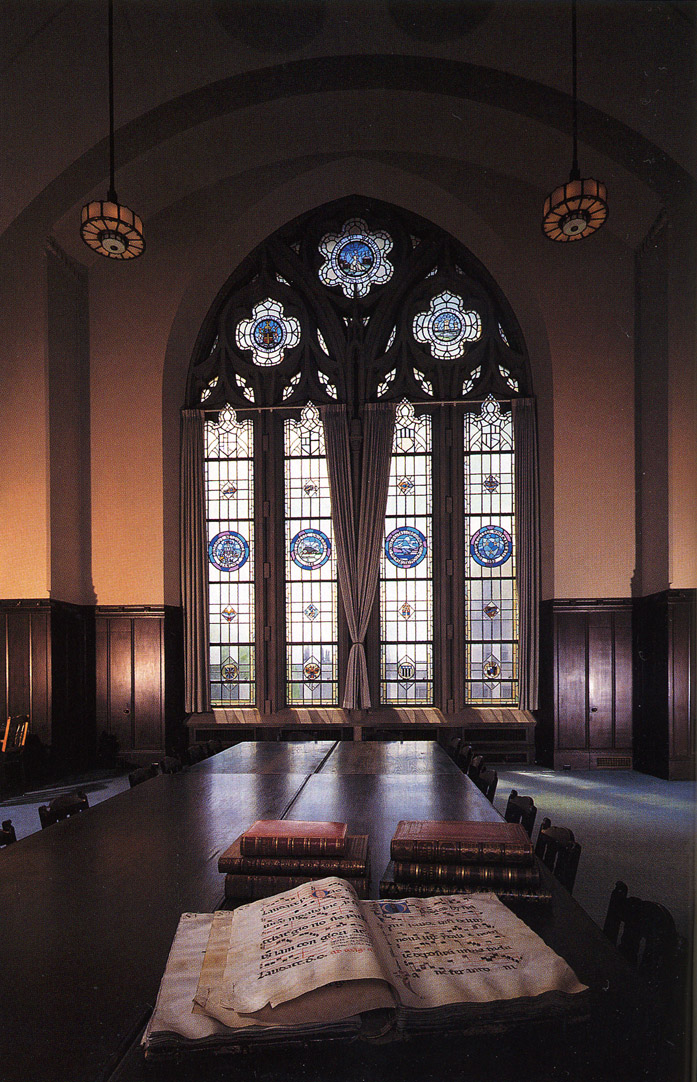
For those of you in the Seattle area who are interested in narrative advocacy from a nursing perspective, save the evening of Thursday April 18th, 2013 . I’m working with Lisa Oberg and Joanne Rich of the University of Washington Health Sciences library to host a nurse writer panel discussion and reading 6-8:30 pm at Suzzallo library, in the Smith Room (photo is of the Smith Room/ free and open to the public). I’ll be there along with some other author/contributors to the anthology True Stories of Becoming a Nurse (see below for information).

The following is the press release for the book.

I Wasn’t Strong Like This When I Started Out:
True Stories of Becoming a Nurse
Edited by Lee Gutkind
Featuring new work by Theresa Brown, Tilda Shalof, and others.

As editor Lee Gutkind points out in the introduction to I Wasn’t
Strong Like This When I Started Out, “there are over 2.7 million
working RNs in the United States (not to mention our many LPNs
and LVNs), compared to about 690,000 physicians and surgeons.
There are more nurses in the United States than engineers … or
accountants and auditors … And, yet, many of us take the work
these men and women do for granted.”

This collection of true narratives captures the dynamism and
diversity of nurses, who provide the vital first line of patient care.
Here, nurses remember their first “sticks,” first births, and first
deaths, and reflect on what gets them through long demanding
shifts, and keeps them in the profession. The stories reveal many
voices from nurses at different stages of their careers: One nurse-in-training
longs to be trusted with more “important” procedures, while another questions her ability to care for nursing home residents. An efficient young emergency room nurse finds his life and career irrevocably changed by a car accident. A nurse practitioner wonders whether she has violated professional boundaries in her care for a homeless man with AIDS, and a home care case manager is the sole attendee at a funeral for one of her patients. What connects these stories is the passion and strength of the writers, who struggle against burnout and bureaucracy to serve their patients with skill, empathy, and strength.
Pub. Date: March 2013, ISBN: 978-0-393-07156-6, 5 ½ x 8 ¼, Trade Paper, 278 pages,
$15.95, Distributed by Publishers Group West

Lee Gutkind has explored the world of medicine, technology and science through writing for more than 25 years. He is the author of 15 books, including Many Sleepless Nights: The World of Organ Transplantation, and the editor of five anthologies about health and medicine, including At the End of Life: True Stories About How We Die.
In Fact Books is a new imprint founded and edited by Lee Gutkind, editor and founder of Creative Nonfiction. In Fact Books titles help create an understanding of our world through thoughtful, engaging narratives on a wide variety of topics and real-life experiences. All titles are distributed by Publishers Group West. For more information, please visit http://www.infactbooks.com.
For interview requests and other media related questions, please contact:
Hattie Fletcher at fletcher@creativenonfiction.org or (412) 688-0304.
Early Praise:

A startling collection of stories from the bedside.
—Paul Austin, author of Something for the Pain: Compassion and Burnout in the ER

The elephant in the living room of healthcare is that providers care deeply about and are affected by the people they tend. The best ones are, anyway. In I Wasn’t Strong Like this When I Started Out, nurses recall pivotal moments with patients and families that changed them from onlookers to active
participants in the art of healing. This excellent collection chronicles those experiences in funny, eloquent, and often piercing essays. It should be required reading for anyone beginning a career in healthcare—nurses and physicians alike. —Margaret Overton, MD, author of Good in a Crisis

Within these pages, we learn what it is like to protect a dying patient from a futile procedure, to smooth a newborn’s wrinkled brow for a postmortem photo, to work in a foreign country where medical equipment is improvised from household supplies. These stories teach us the essence of nursing—that even when cure is not possible, comfort is. —Catherine Musemeche, MD, surgeon and author

The nurses in this collection bear witness to life, death, suffering, joy—the many aspects of humanity itself. These are no saccharine tales of self-sacrifice, of stereotypical Florence Nightingale-like ladies with lamps. The men and women in this collection tell stories that cut to the bone, exposing their profession’s deep emotional, intellectual, physical, and spiritual trials. Yet, in those struggles emerges great beauty and human connection. This collection exposes not only the strong, beating heart of nursing, but its brain, muscle, sinew and nerve endings—alive, pulsating, raw, real.
—Sayantani DasGupta, MD, MPH, co-editor, Stories of Illness and Healing: Women Write Their Bodies

An honest and compassionate collection of life in nursing. In voices of novices and veterans in the field, it’s an intimate portrayal of how growth is a two way street. Whether listening, touching or just remembering, when you do anything you can to help your patient, your life is also shaped in the process. They are not just lessons, but gifts, that transcend any hierarchy in medicine.
—Gulchin A. Ergun, MD, Clinical Service Chief, Gastroenterology

Like most physicians, I have a long list of nurses who have mentored me, influencing my practice of medicine in the way they live their lives and care for their patients. This book is a testament to those wise nursing colleagues–and to the paths that have brought them their wisdom.
—Marion Bishop, MD, PhD, Emergency Medicine physician and essayist

With tenderness, honesty, humor, and some anger, the authors of these engaging essays draw us into the complex beauty of nursing from an exhilarating variety of perspectives. This welcome, eye-opening collection should be required reading for every medical student and apprentice hospital administrator.
—Margaret Mohrmann, MD, PhD, University of Virginia

In these powerful narratives, twenty-one nurses unfold what it means to practice their profession: what they are thinking and feeling when they care for patients and when they go home, how they came to choose this difficult and rewarding career, their satisfactions and frustrations, their triumphs and traumas. Moreover: they write exceedingly well.
—Charles Bardes, MD, author of Pale Faces: The Masks of Anemia and Essential Skills in Clinical Medicine

Poignant recollections from often ignored voices in medicine. These wonderful stories resound with truth. —Sandeep Jauhar, author of Intern: A Doctor’s Initiation

Note: My essay “Next of Kin” is included in this anthology. I am the “nurse practitioner wonders whether she has violated professional boundaries in her care for a homeless man with AIDS” included in the book blurb above.

In order to complete the sites visits and other research necessary for writing my essay, I received a 2011 Individual Artist Award from 4Culture. Therefore, this project was supported, in part, by an award from 4Culture; thank you 4Culture.4culture_color


Hospital Quality: A Different View

Paul Farmer (of Partners in Health fame) has an easy-to-apply formula for DSC00749quickly assessing the quality of hospitals or clinics anywhere in the world. He says that given the resources of the country, he looks at the quality of the hospital/clinic bathrooms and the gardens surrounding it. Based on just those two items, he claims he can accurately assess overall hospital/clinic quality—and afterwards correlate it with more ‘objective’ measures of quality and safety. Try out his quality assessment at your own hospital/clinic work-site, and maybe as a New Year’s resolution try to influence improvements.

My office at work is in the world’s largest university building: the Warren G. Magnuson Health Sciences Building at the University of Washington. The building has close to 6,000, 000 square feet of space and is composed of over twenty wings whose hallways are connected, but in a haphazard, disorienting way. The building is an Escher-esque sort of place, with faceless people wandering the hallways and strange concrete staircases going everywhere and nowhere. Ten thousand or so people work (or are hospital patients) in this building. At any given time at least half of the people are lost. I am usually one of them. The building includes a hospital and four health science schools—medicine, nursing, public health and dentistry. The fifth health science school—social work—was lucky and is far across campus in its own (very small) building.

The Health Sciences Building is sandwiched between three busy streets and one busy ship canal. Many of its courtyards are completely covered in concrete, with only a few stalwart and scraggly rhododendrons popping up in places. The bathrooms are tiled and painted a sickly yellow-beige that reminds me of public high school gym locker rooms.

My office is in the ugliest wing of the world’s largest university building. My office has a fault line running through it. There is a 6-inch wide grey rubber seam that bisects my office in two—it runs up one wall, across the ceiling, down the other wall, and across the floor. This rubber seam is the building’s earthquake shock absorbers. I often wonder what it would be like to stand on the fault line during an earthquake. Would I be safer there than ducking under my fake-wood desk? My office also has a door that goes nowhere. Supposedly it allows access to various pipes and electrical wires in the concrete-encased outer phalanges of the building. This door is perpetually locked and I have hung a silk scarf over it to make it seem less weird. I tell students it’s where old faculty members go to die. I often want to crawl in there and take a nap.

The particular part of the Health Sciences building I work in, the T-wing, was built in the late 1960’s and is a prime example of Brutalism. It is also a prime example of why Brutalism is not an architectural style suited either for Seattle weather or for being attached to a hospital. Outside and inside it appears to be made of crumbling, damp and moldy concrete. In one staircase I use there are arm-sized stalactites forming on the ceiling and liquid is perpetually dripping from their pointed ends into a black and green puddle in one corner of a stair landing. It has a bizarre beauty. Over Winter Break the stalactites were removed and the ceiling painted over. I find that I miss them.

University of Washington Medical Center does fairly well on most quality measures included in Medicare’s Hospital Compare. Under ‘patient satisfaction survey’ they include an item on cleanliness of bathrooms. (Gardens aren’t included). If you haven’t used this website before, I encourage you to do a search of hospitals in your area. They have recently added a section on hospital readmission rates.

Where to Get Your Words Out

American Journal of Nursing
American Journal of Nursing (Photo credit: random letters)

Here are some specific resources for where to get published. This is primarily intended for writers of personal essays, short stories and poems dealing with health and health care-related issues. I’ve geared the list towards nurses, but all of the journals included here accept writing from any type of health care provider, as well as from patients and family members.

Remember to do your homework before submitting to any of these journals or blogs: follow their current submission guidelines and read their published content to make sure it is a good fit for your work.

Good general all-around resources for writing and publishing:

  • Duotrope. They have recently added a nonfiction category to their excellent searchable database of literary journals and magazines, as well as information on small presses open to book manuscript submissions.

Good resource for almost all things related to medical humanities (intersection of medicine/healthcare and creative work):

Journals:

  • American Journal of Nursing. I’ve linked to their editorial manager page that has information for potential authors. Check out their Art of Nursing, Viewpoint, and Reflections sections as these are the ones accepting more creative types of writing. (They also pay a $150 honorarium for each published piece!).
  • Bellevue Literary Review/NYC Langone Medical Center. Excellent print publication. Highly selective and they can take up to six months to review a submission, so I don’t recommend them for first-time authors. But I highly recommend the journal for reading good narrative medicine type writing. They also have really cool archived historical photos from Bellevue Hospital, the oldest continuously running hospital in the U.S. (although Hurricane Sandy seriously affected their buildings and operation).
  • Creative Nonfiction. This print journal is highly selective, only includes creative/narrative nonfiction, and is not primarily geared towards health-related writing. But the editor, Lee Gutkind, has his heart in medical narratives.
  • Pulse: Voices from the Heart of Medicine. “An online magazine that uses stories and poems from patients and health care professionals to talk honestly about giving and receiving medical care.” You can sign up to get a weekly short essay (800 word limit) or poem (they currently are closed to poetry submissions as they have too many to review).
  • The Examined Life Journal/University of Iowa Carver College of Medicine. A relatively new (now biannual) print journal from the medical school linked with the most prestigious writing school in the country. This is where Abraham Verghese honed his writing skills. They have a new annual writing contest/deadline is January 10, 2013.

Blogs can be a good place to get started as a writer. Consider submitting to an existing group blog to have your work included as a guest blogger. An excellent one is HealthCetera at the Center for Health Media and Policy at Hunter College. Joy Jacobson, MFA (health care journalist and poet) and James Stubenrauch, MFA (writer and editor) are both Senior Fellows at the Center for Health Media and Policy, Hunter College School of Nursing. They both have worked as editors for the American Journal of Nursing. I ‘spoke’ with them via e-mail this past week and they wanted me to encourage my students (and other nurses) to consider submitting a guest blog post.

So no excuses! Get your words out and get them published.

Transitions

Road cones
Road cones (Photo credit: Christchurch City Libraries)

Transitional care: part of care coordination across time and settings, specifically for patient populations at high risk for poor and costly outcomes as they cross health care settings.

There is the ideal (smooth, patient and family-centric) transitional care and then there is reality.

Case in point is my elderly father with congestive heart failure—the diagnosis associated with the highest Medicare health care costs. My father has been in four different health care settings over the past six weeks. These include an inpatient acute care hospital, a skilled nursing care/rehab facility, home nursing care, and as of today, home hospice. I have worked as a nurse in three out of four of the specific health care systems he has moved through. I know something about how they work—the key people to contact—the questions to ask—the code words to use to get things done. In spite of all that—plus flying cross-country to do much of this care coordination in person—it has been more than just difficult. As my father says, “There’s been a mix-up everywhere I go—it’s as if none of them communicate with each other.” Indeed, it shouldn’t be this hard. I keep wondering: how do people with fewer resources do this?

The metaphor for ‘good enough’ healthcare transitions that has occurred to me are those orange safety cones lined up re-directing traffic. Knowing the more ideal freshly paved road of smooth health care transitions is a ways off in the future, all I’ve yearned for are orange safety cones. I did finally see one bright orange safety cone today. It came in the form of a wonderfully compassionate male hospice nurse who spent over an hour patiently and respectfully talking to my father about quality of life–about what matters most to him and how hospice can help support him to pursue those things. Finally! Sanity and clear, direct communication from someone in the health care system. I thanked this nurse and asked him how long he’d been in nursing–14 years–and what he did before nursing–he owned/operated a bar. There are many paths to becoming a really great nurse.

Notes on (Men in) Nursing

Cover of "Notes on Nursing"
Cover of Notes on Nursing

In the Preface of Notes on Nursing, Florence Nightingale wrote, “…every woman is a nurse.” That men were—or could be—nurses was not within Nightingale’s Victorian worldview. Men were doctors (husbands) and women were nurses (wives and mothers). A re-read of her book revealed to me one place in which she hints at the fact that men could be useful as nurses. It comes mid-way through her chapter “Noise”:

“A man is now a more handy and far less objectionable being in a sick room than a woman. Compelled by her dress, every woman now either shuffles or waddles—only a man can cross the floor of a sick-room without shaking it!”

She goes on to condemn the wearing of rustling silk and crinoline and the creaking of stays and shoes. Presumably she advocated simple (and quiet) cotton dresses for nurses.

As I wrote in my previous blog post “More than a few more men needed in nursing” (12-15-10), nursing continues to be the least gender balanced of any of the health professions. The traditionally male-dominated medical profession has achieved almost perfect gender balance. The other traditionally female-dominated profession of social work now has at least 20% men, while nursing continues to have a paltry  7% men in the workforce.

Until this week I considered myself an enlightened female nurse on the issue of gender diversity in nursing. But then I started looking at the required readings—especially the ones from nursing textbooks—that I had assigned for my community health course. I realized how un-gender neutral they are. All of the contemporary community/public health nurses who are quoted or included in photographs in the chapters are female. An otherwise well-written chapter on the history of public health nursing in the U.S. only mentions female nurses and uses terms like “our sister nurses” and “our foremothers.” Where are our brother nurses and our forefathers?

Important facts I learned this week from reading up on the topic of men in nursing include:

  • Men in nursing have a long and venerable history that is not acknowledged or taught very well in nursing schools. The history includes monastic orders dating back to the fourth and fifth centuries.
  • In the U.S. beginning after the Civil War men were actively shut out of nursing. For instance, the U.S. Army Nurse Corps banned men until 1955. When men were allowed to be nurses they were mainly confined to psychiatric nursing, which was considered dangerous and undesirable work for female nurses.
  • The commonly held perception (and resentment) among female nurses that men in nursing disproportionately get promoted and hold higher-paying administrative positions over their female counterparts does have merit. Economists call this phenomenon the “glass elevator,” and it applies to men in all female-dominated occupations (pink-collar jobs). However, within nursing this could also be partially explained by the fact that most men enter nursing at an older age and after time in another career versus their female counterparts. (see NYT ” More Men Enter Fields Dominated by Women” by Dewan and Gebeloff/5-20-12 and “More Men Trading Overalls for Nursing Scrubs” by Vigeland/3-21-12).
  • The Institute of Medicine’s Future of Nursing report specifically identifies improvement in gender diversity as a necessity for nursing. Running a profession on only half of the population (gender-wise) is unwise and untenable.

My conclusion: Nursing needs the best and the brightest no matter what their chromosomal make-up happens to be. We need more men in nursing. We need better nursing textbooks….